Heat pump not cooling in Mason City, IA

Step 1 of 3: Equipment

Why is my heat pump not cooling my house?

You've got the heat pump running and air coming out of the vents, but the house just isn't cooling down. With a Mason City summer getting sticky, that's not something you want to wait out. The question is whether this is something simple or a sign the system needs a repair before it gets worse.

Most likely a refrigerant leak or a problem reversing the valve

A heat pump cools by moving heat out of your house, and that depends on refrigerant and a reversing valve that switches the system between heating and cooling. If the refrigerant level is low from a leak, the system can't pull enough heat out of the air, so it runs but doesn't cool. If the reversing valve is stuck, the unit may still be trying to heat even with the thermostat set to cool. A dirty outdoor coil can cause the same symptom, since it can't release heat properly if it's caked with grass clippings or dust. Any of these needs a contractor to open up the system and find out which one it is, since guessing wrong just means more time without cooling.

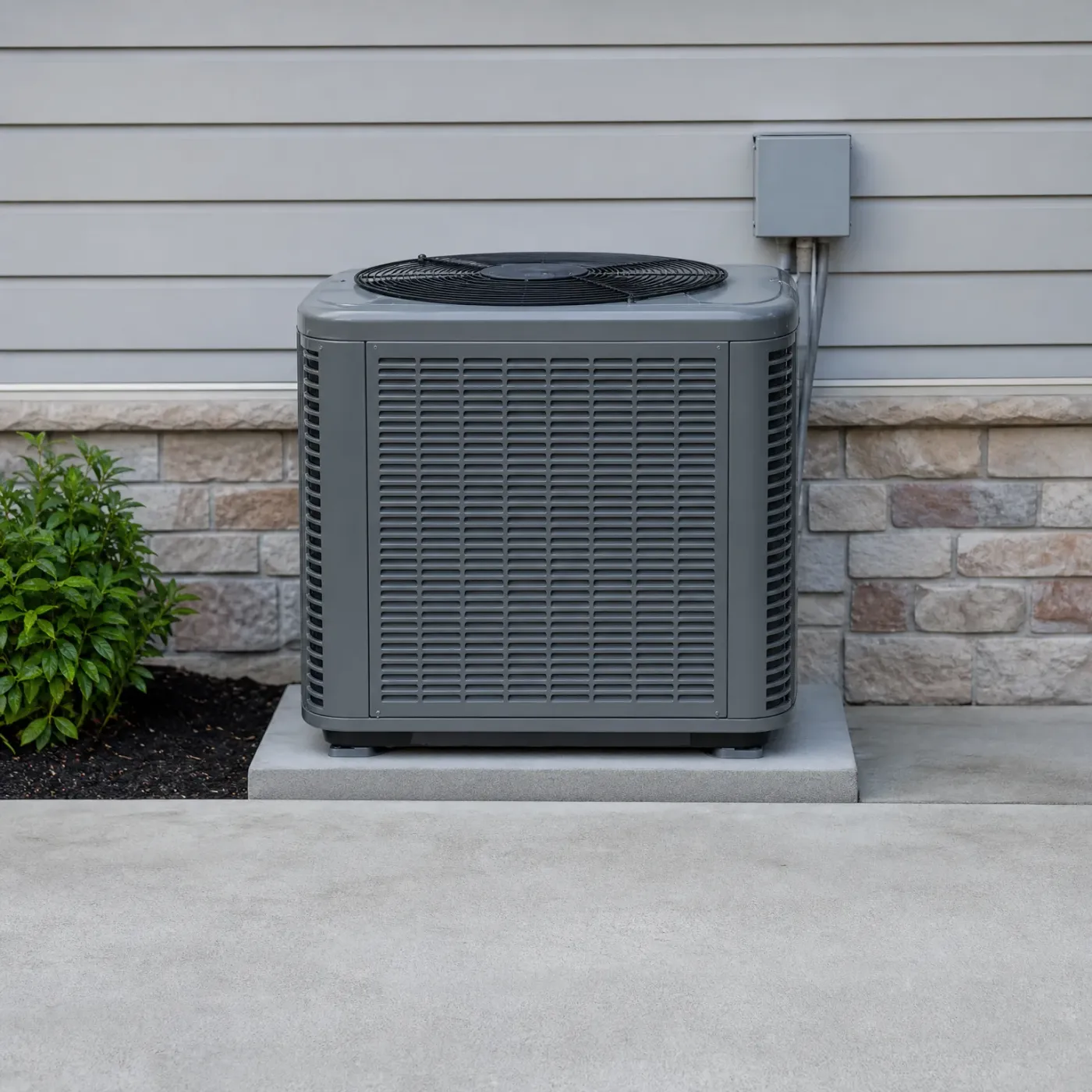
A gray outdoor condenser unit sits on a concrete pad against a house wall with horizontal siding above a stone veneer base, with an electrical disconnect box and conduit on the wall and a leafy shrub in mulch to the left.

Running the way it should

Air comes out of the vents cold, the outdoor unit cycles on and off instead of running nonstop, and the house holds a steady temperature through a sticky Mason City afternoon. The refrigerant lines stay clear and the unit outside looks the same as the day it went in.
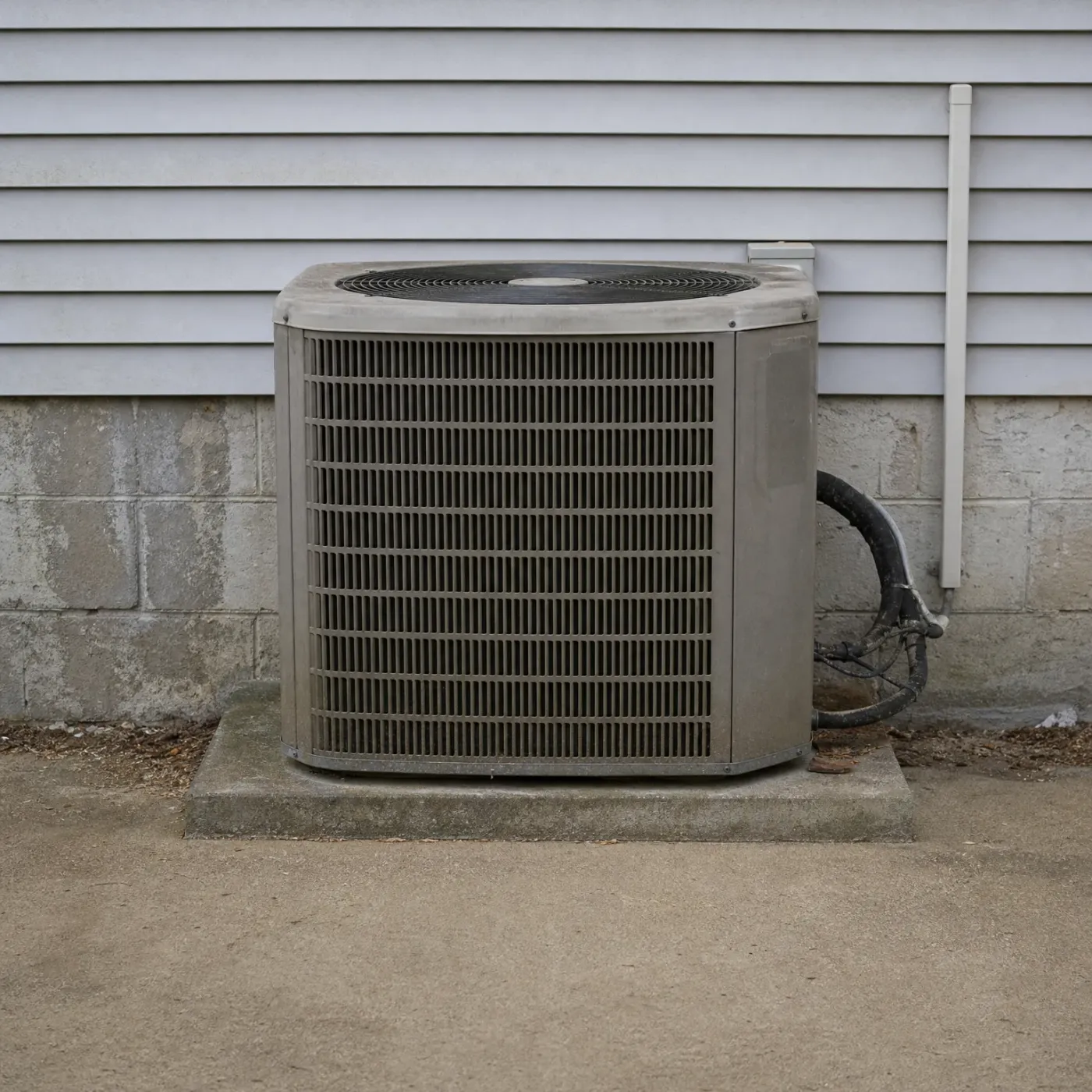
An outdoor air conditioner condenser unit on a concrete pad beside a house with horizontal siding above a concrete block foundation, with insulated refrigerant lines and a vertical white pipe on the wall.

Struggling to keep up

The outdoor unit runs long stretches without shutting off, ice shows up on the lines, or the air coming out barely feels cool. Weathering, a worn cabinet, or lines rubbing against the foundation are often signs the system has been losing ground for a while.

Why Your Heat Pump Isn't Cooling

Low on refrigerant

  • The system loses its charge slowly through a pinhole leak in the coil or a loose fitting, so cooling fades over weeks rather than stopping all at once.
  • Ice can form on the outdoor unit or the indoor coil even while the house is warm, because the refrigerant pressure drops too low to keep the coil above freezing.
  • A contractor has to find the leak and seal it before adding refrigerant back, since topping it off alone just buys a few more weeks.
  • The outdoor unit may run constantly without the house ever reaching the set temperature, because there isn't enough refrigerant left to move heat out of the air.

Stuck in heat mode

  • The reversing valve controls whether the system heats or cools, and if it sticks, the heat pump keeps sending warm refrigerant through the indoor coil instead of cold.
  • Air still blows from the vents, so it can look like the system is working when it's actually just moving warm air around the house.
  • A valve that sticks tends to do it again, especially if it's been stuck once before and only freed up on its own.
  • This is a mechanical failure inside the unit, not something a thermostat setting or a reset can fix.
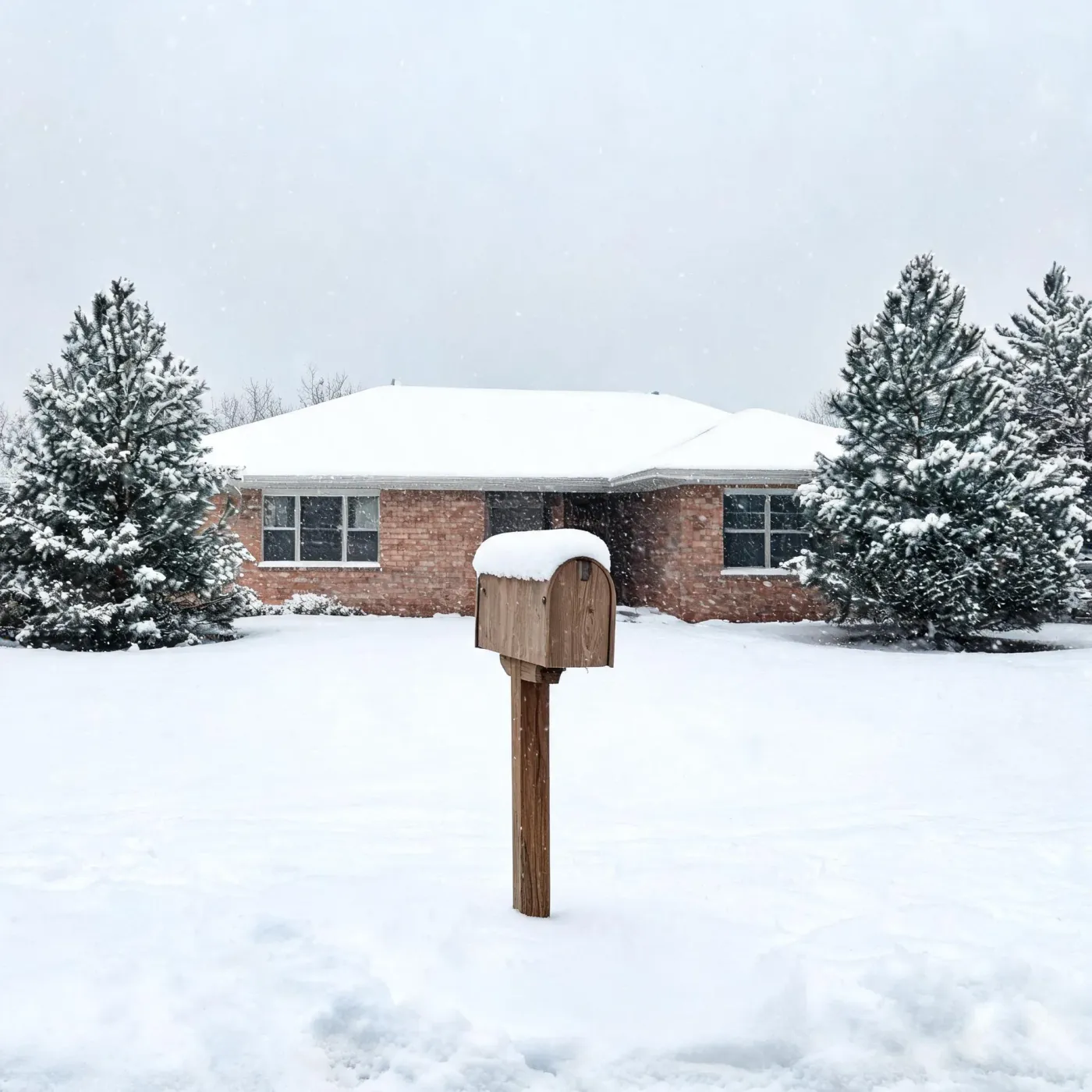
A snow-covered wooden mailbox on a post stands in a snowy yard in front of a single-story brick house flanked by snow-laden evergreen trees during falling snow.

A heat pump works both directions, and the same unit outside cooling your house in July is what keeps it warm in January. Cerro Gordo County winter nights average 12°F, per NOAA climate data, and that's hard running for the outdoor unit for months at a stretch. Parts that get stressed all winter, the reversing valve, the compressor, the defrost control board, don't always fail right away. Sometimes a unit limps through the cold and the strain shows up as a cooling problem once summer heat sets in. If your heat pump is on the older side, this winter could be part of why it's not keeping up now. A contractor who knows what Mason City winters do to these systems can tell you if that's what's going on here, without you having to explain the whole history yourself.

NOAA nClimDiv 1991-2020

A pro who works on heat pumps

A heat pump that's blowing warm air in July isn't a small thing to put off, not with Mason City humidity sitting on the house all afternoon. You could start calling contractors yourself, explaining the same symptoms over and over, waiting on callbacks, and trying to judge who actually works on heat pumps versus who mostly does furnaces. That takes time you don't have when the house is already warm. Submitting the request here means one contractor who handles heat pump repair in this area gets your information and follows up with you directly, instead of you sorting through quotes from five different companies. Whether it turns out to be low refrigerant, a stuck reversing valve, or something with the outdoor unit itself, the first step is getting someone qualified to look at it. That part doesn't need to sit on your list another day.

Why the outdoor unit works so hard

A heat pump cools by moving heat from inside your house to the air outside, and that only works if the outside air can take it. When a Mason City afternoon sits heavy and humid, the outdoor unit has to run longer to move the same amount of heat. If that unit is low on refrigerant or the coil outside is caked with dirt and grass clippings, it loses its ability to shed heat fast enough, and the house falls behind no matter how long the system runs.

What the reversing valve controls

Inside the unit is a reversing valve that decides whether the system cools the house or heats it. That valve switches the flow of refrigerant, and if it sticks or fails partway, the unit can blow air that's neither cold nor warm, or get stuck heating in July. It's a single part, but the whole system depends on it switching cleanly, and a valve that doesn't fully seat is enough to keep a house from cooling down even with everything else working.

Why does a heat pump here have so much work to do all year?

  • Winter nights average 12°F

    Winter nights average 12°F here, per NOAA climate data, and the same unit cooling your house now runs in reverse to heat it then.

  • Heat runs October through May

    Heat runs October through May in Cerro Gordo County, so the outdoor unit spends most of the year working, not sitting idle between summers.

  • Cooling runs June through August

    Cooling runs June through August, a short stretch compared to heat, which is why a summer breakdown gets noticed fast.

NOAA nClimDiv 1991-2020

A house that doesn't cool off by evening means a heat pump that's losing the fight against the afternoon humidity, not one that's about to catch up on its own.

Left alone, that's a warm house through the rest of a Mason City summer and a unit outside that keeps running without getting anywhere.

A woman with long blonde hair in a light blue shirt leans back on a beige sofa with her eyes closed, in a softly lit living room with cushions and a blurred plant and shelf in the background.
A woman with long dark hair in a gray knit sweater sits on a gray sofa with a cushion, looking toward a window in a living room with framed pictures and a lamp in the background.
A woman with long dark hair in a light grey knit sweater sits on a sofa indoors, looking to her right, with a framed landscape picture, a potted plant and a curtained window behind her.
A woman with long dark hair leans back against a gray sofa with her eyes closed, in a living room with a curtained window, a potted plant, and a dark screen in the background.

Where This Leaves You

  • A heat pump that isn't cooling the house down is losing a fight it won't win on its own.
  • Warm air at the vents, short cycling, or ice on the outdoor unit all point to a system that needs a technician, not more time.
  • Waiting through a Mason City summer hoping it corrects itself usually means a hotter house and a harder-working unit.
  • Diagnosing the actual cause, whether it's refrigerant, airflow, or a failing part, takes someone who can look at the system directly.
  • Getting matched with a contractor skips the calling around and re-explaining the same symptoms to one company after another.
  • Once you're matched, the contractor follows up with you directly to sort out the repair.

A heat pump that won't bring the house down to temperature in a Mason City summer isn't going to sort itself out. Warm air at the vents, an outdoor unit that short cycles, ice where there shouldn't be any: these are signs of a specific problem, whether that's a refrigerant leak, a blocked coil, or a part that's failing. None of those get fixed by giving the system more time to run. They get fixed by someone standing in front of the unit, checking the charge, checking the airflow, and finding out which one it actually is.

That part takes a technician. What doesn't have to take up your afternoon is the search for one. You don't have to look up contractors, call each one, explain the same warm-air problem five times, and then sit with a stack of quotes trying to figure out who's worth calling back. Getting matched with a contractor cuts that down to one step. You answer for your situation once, and the contractor who gets matched to you follows up directly to work out the repair.

The house isn't going to cool down on its own, and the longer the system runs without answers, the harder it's working for the same result. The fix is straightforward once someone's looked at it. Getting to that someone is the part this page takes off your plate.

Sunlight falls across a beige upholstered sofa with a textured woven cushion and a chunky knit throw, beside a dark wood cabinet holding a ceramic vase with green leafy branches, near a white-framed window.
A sunlit corner of a room with a wooden side table holding a ceramic vase of green foliage and a wooden bowl, beside a light upholstered sofa with a knit throw and rust-colored pillow, with window shadows cast on a beige wall.
A sunlit room corner with beige walls, a white-framed window with sheer cream curtain, wood floor with a light rug, and a woven basket holding a knit blanket.
A beige ceramic vase holding a leafy green branch sits on a wooden cabinet in a corner, with sunlight through a sheer curtain casting leaf shadows on the wall.
A grey upholstered sofa with a rust-orange velvet cushion and a textured throw sits beside a window with linen curtains, next to a wooden side table holding a pale ceramic vase of olive branches.

Get your heat pump to the right pro

One form replaces the calls you'd make to find a heat pump pro.

Skip the calls

You only hire the pro if you want to.