
Heat Pump Iowa

Heat pump running all the time in Mason City, IA

Connect with a pro

A heat pump that never shuts off in a Mason City winter usually means it's losing a fight it can't win, whether that's the cold outside or something wrong with the unit itself. Either way you're watching the power bill climb and wondering if the system is actually keeping up or just running itself ragged. With power costs what they are in Cerro Gordo County, that matters. The right move is getting someone local to look at it, someone who works on heat pumps through winters like this one and knows what tends to give out when temperatures drop and the system has to lean hard on backup heat. Submit your information and you'll be matched with one licensed contractor who serves this area, not a handful of companies competing for your callback. They'll reach out to you directly about your system and what you're seeing.

Why does my heat pump run constantly in Mason City?

Your heat pump has been running nonstop and you're not sure if that's just what happens once it gets cold out here, or if something's actually wrong with it. You want to know which one it is before the bill arrives, and whether this is worth a repair call now or something that can wait.

Below freezing, it's normal for a heat pump to run almost constantly

A heat pump moves heat from the outside air into your home, and the colder that air gets, the harder it has to work to pull any heat out of it. Once outdoor temperatures drop into the teens and 20s, which happens for stretches most winters in Cerro Gordo County, a heat pump running nearly all day is just doing its job. That's different from a unit that runs constantly but still can't keep the house warm, or one that's frozen over, making odd noises, or cycling on and off every few minutes. If your home feels warm and steady, the long runtime alone isn't a problem. If it's running nonstop and still losing ground, something in the system needs a look.

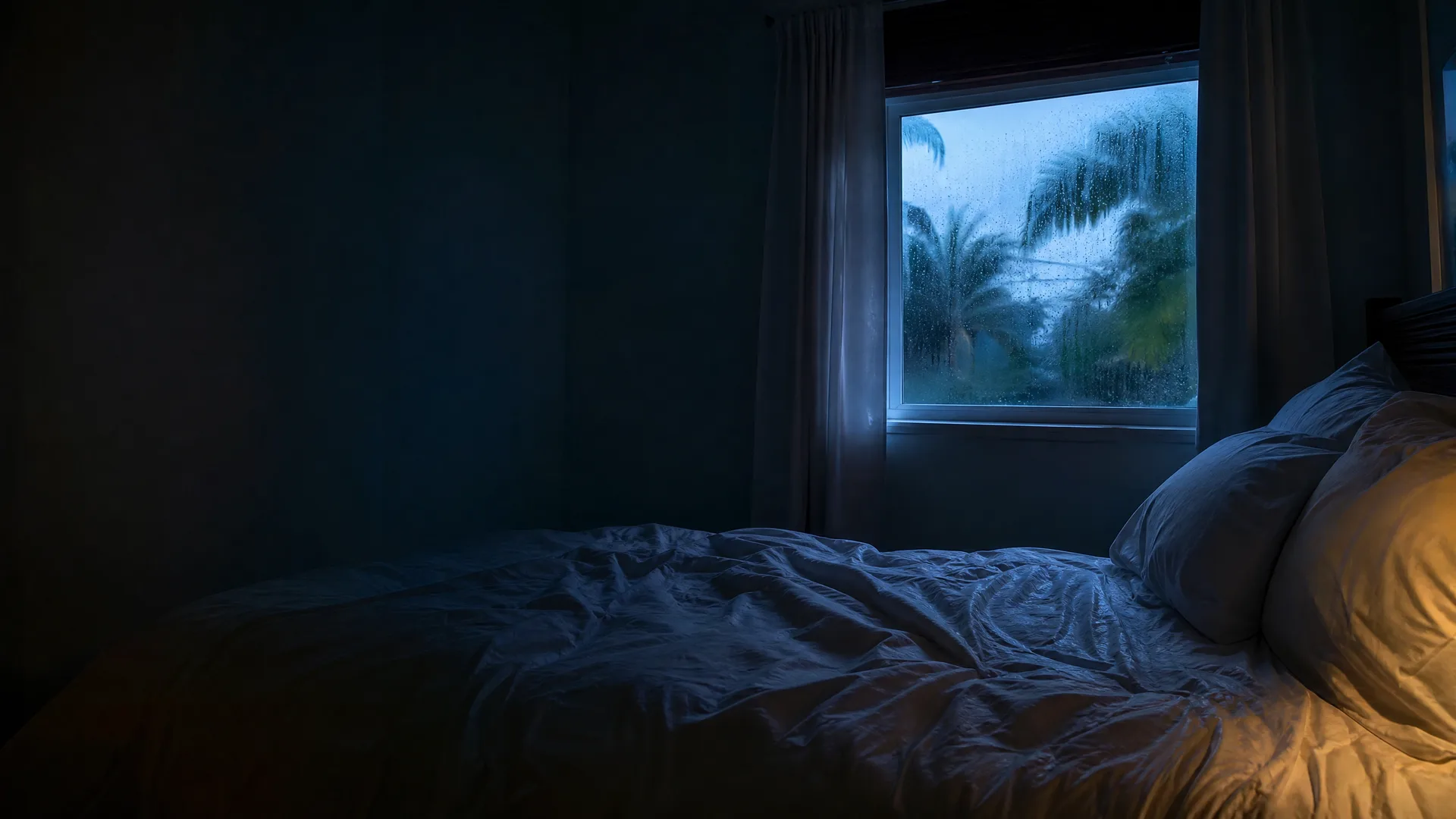
A dark bedroom with an unmade bed and pillows beside a curtained window showing rain-streaked glass and palm foliage outside.

It's past eleven and you're still awake. The sheets are damp under you, bunched where you've been turning over trying to find a cool spot that doesn't exist. Outside, a Cerro Gordo County summer night isn't giving you anything, thick air pressing against the glass, the window fogged along the edges where the cold inside meets the heat out there. Down the hall you can hear it, that low steady hum that hasn't stopped in an hour, maybe longer. You get up and check the vent above the bed anyway. The air coming out feels soft, not cold, not really moving the way it used to. You lie back down and stare at the ceiling fan doing what it can.

Why does your heat pump work this hard here?

  • Winter nights average 12°F

    Winter nights here average 12°F, and a heat pump has to pull heat from air that cold. That's a long stretch of hard work for one unit.

  • Heat runs October through May

    Heat runs October through May in Cerro Gordo County. That's eight months a year your heat pump can't just coast, it has to keep up.

  • Cooling runs June through August

    Cooling only runs June through August here. The other nine months, it's your heat pump carrying the load, which is why trouble shows up in winter first.

NOAA nClimDiv 1991-2020

A heat pump moves heat, it doesn't make it, and below freezing that gets harder, so the system compensates by running longer cycles instead of short ones. That part is normal. What's not normal is a defrost cycle that won't let go. Every so often the outdoor unit reverses and briefly runs as an air conditioner to melt frost off the coil, then switches back to heating. That should take a few minutes. If the defrost sensor or the reversing valve is sticking, the unit can get stuck mid-cycle, or cycle into defrost too often, and that shows up as the system running nonstop while the house still doesn't feel warm. Another thing worth knowing: most heat pumps here pair with backup electric strip heat that kicks in when the outdoor coil can't keep up. If that backup is firing more than it should, because of a low charge or a failing component, the compressor ends up running alongside it almost continuously, and that's the stretch that shows up on the bill.

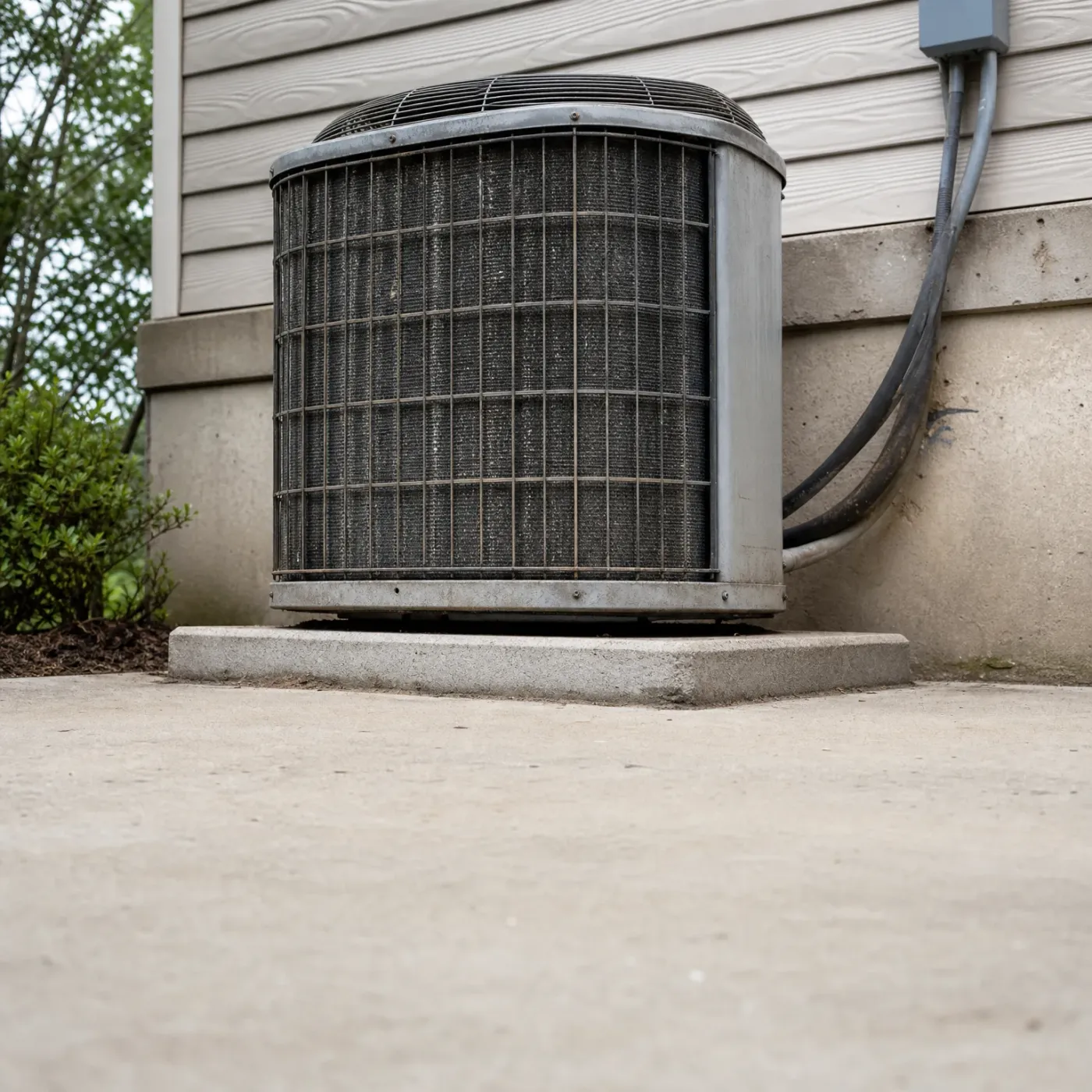
An outdoor air conditioning condenser unit on a concrete pad beside a house with horizontal siding and a concrete foundation, with refrigerant lines running to a wall-mounted disconnect box and shrubs at left.
Before you get your heat pump repair
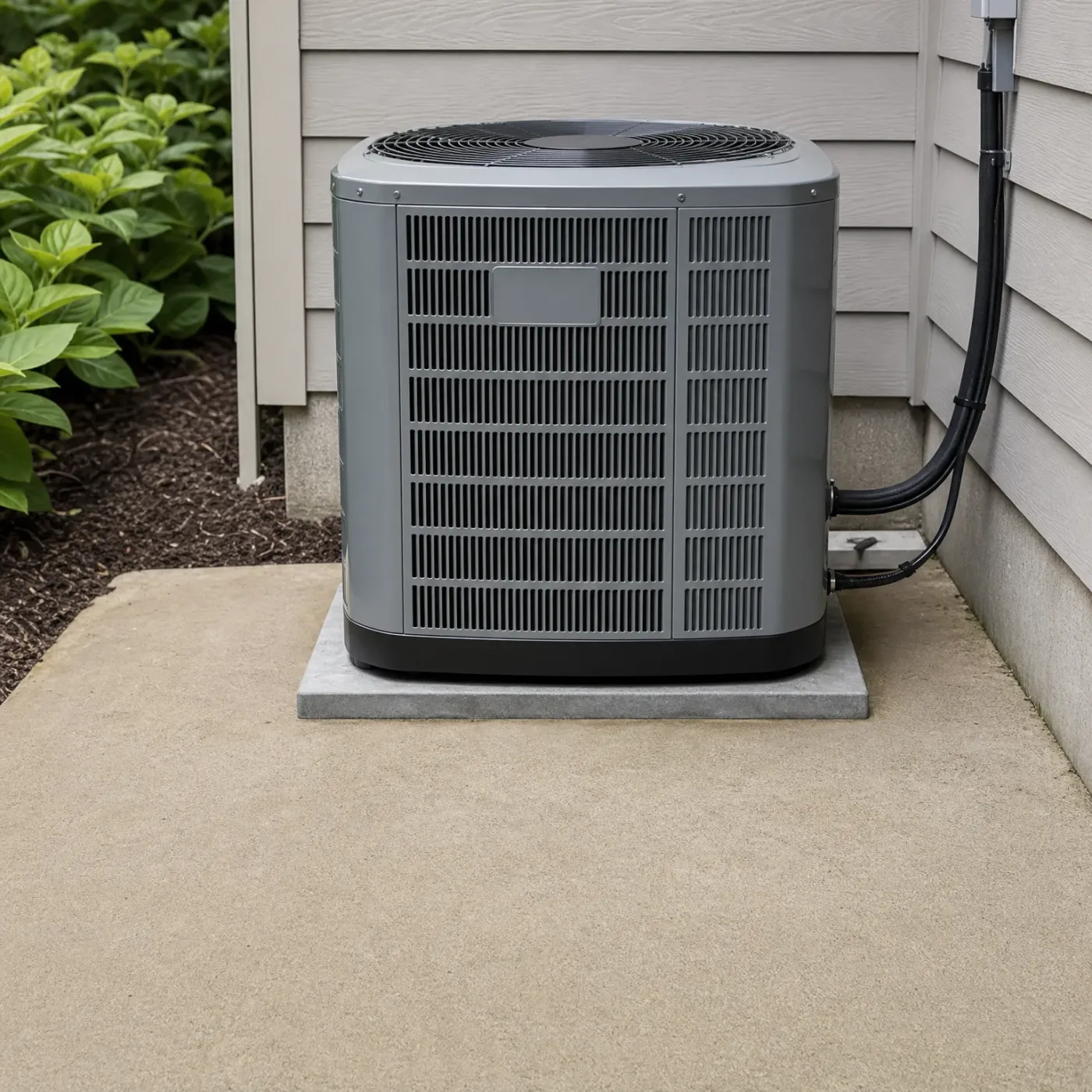
A gray outdoor air conditioner or heat pump unit on a concrete pad beside a house with horizontal lap siding, with conduit and refrigerant lines running up the wall and green shrubs and mulch at left.
After you get your heat pump repair

Find a heat pump repair pro in Cerro Gordo County

A licensed pro who repairs heat pumps in Cerro Gordo County gets your request.

No charge to send it. You decide if you hire them.

Most homes in Cerro Gordo County heat with gas, and a heat pump here usually works alongside a furnace rather than on its own once temperatures drop low enough.

If yours is running nonstop without the furnace ever kicking in, the switchover isn't happening the way it should, and that's a job for someone who knows this setup.

Power here costs 17.02 cents per kilowatt-hour

At 17.02 cents per kilowatt-hour, a heat pump that won't cycle off shows up fast on your bill. One stuck running nonstop for days adds up quick at that rate. The longer it runs without shutting off, the more reason to find out why before the next bill arrives.

EIA-861 2025

Running long because of the cold

Below freezing, a heat pump has to work longer to pull the same amount of heat out of the air, so cycles stretch out and the unit stays on more than it would in October. That's expected on a hard Cerro Gordo County night. It should still catch up and shut off once the house reaches temperature, and your furnace should be taking over the heavy lifting once it's cold enough outside. If the air coming out still feels warm and the house is holding its temperature, the long runtime by itself isn't a problem.


Running long because something's wrong

If the heat pump runs straight through without shutting off, and the house still isn't warming up, or the furnace never kicks in even on the coldest days, that's not the weather doing it. A low refrigerant charge, a failing defrost control, or a stuck reversing valve can all make a unit run nonstop while barely heating the house. You'll also notice the air feels cool instead of warm, or the outdoor unit stays iced over longer than it should. That's a repair, not a cold snap.

An older woman with short gray hair in a cream cable-knit turtleneck sweater smiles while looking to the side in a wooden kitchen, with a round loaf of bread on a board in the foreground and a lit candle by a dark window.
A woman with dark hair in a bun sits wrapped in a chunky knit blanket on a couch with a child resting his head on her shoulder, eyes closed, beside a lit lamp and bookshelf indoors.

What to Do From Here

  • Nonstop running is normal on the coldest nights but not for days without a single break.
  • A defrost cycle that won't release, or an outdoor coil caked in ice, points to a real fault.
  • If the furnace never kicks in during a hard freeze, the switchover between heat pump and furnace may not be working.
  • At 17.02 cents per kilowatt-hour, a stuck system runs up your bill fast, and the longer it runs, the more reason to check it.
  • A local contractor who services heat pumps all winter can tell you quickly whether this is the cold or the equipment.

A heat pump that runs hard on a 12 degree night is doing its job. One that runs for days without a break, never releases from defrost, or never hands off to the furnace is telling you something is wrong. You don't need to guess which one it is. The signs are specific enough to check yourself: ice on the outdoor coil that doesn't melt off, a furnace that stays silent through a hard freeze, a power bill that jumps faster than the weather explains. Any one of those means the system needs a look from someone who knows it, not just time to work through the cold. Cerro Gordo County winters ask a lot of a heat pump, and most of what it does under that strain is normal wear on a system doing exactly what it was built to do. What isn't normal is a fault hiding behind the cold snap, costing you at 17.02 cents per kilowatt-hour every hour it runs. A contractor who works on these systems all winter in this area has seen both versions enough times to tell them apart fast, usually without much guesswork on your end. You get one contractor, local, who knows what tends to fail first in weather like this. From there it's a short visit to find out if your unit just needs the cold to break, or if something inside it needs fixing before the next stretch of hard weather gets here.

A woman with dark hair in a bun wearing a cream knit sweater sits on a gray sofa in a bright living room, looking off to the side.
A woman wrapped in a knit blanket sits on a gray sofa in a living room, looking toward a bright window with houseplants and an armchair in the background.
A woman in a gray cowl-neck sweater sits on a light sofa with cushions, smiling and looking to the side, with a kitchen and window visible behind her.
A woman with dark hair in a bun, wearing a light linen shirt, sits on a sofa and looks to the side, with a window, houseplants and a kitchen with pendant lights blurred behind her.

Heat Pump Repair

The right pro for this job

A licensed pro who works in Cerro Gordo County gets your request.

A black-framed smartphone standing upright against a plain light gray background, its screen filled with solid green.
Step 1 of 3: Equipment