Heat Pump Iowa
Profile view of a bearded man wearing a dark green baseball cap and a dark gray T-shirt against a plain light background.

When to replace a heat pump in Fort Dodge, IA

Step 1 of 3: Equipment

How do I know when it's time to replace my heat pump in Fort Dodge?

Your heat pump has to work harder in Fort Dodge than it would somewhere milder. It carries your heating through the cold months and your cooling through the sticky ones, with no gas furnace to split the load. When it starts running longer, cycling oddly, or needs another repair call, you're left wondering if this is a fix or if the unit itself is done.

Replace it once repairs get frequent or it can't keep up on the coldest days

A heat pump that needs a service call every year, or one that's started running up your bill without doing a better job of heating or cooling the house, is telling you it's wearing out. In Webster County that matters more than most places, because your heat pump likely covers both your winter heating and your summer cooling, so a weak unit shows up twice a year instead of once. If it struggles to keep the house warm on the coldest days, or the outdoor unit is icing up and not defrosting properly, those are signs the compressor or the system's capacity is failing, not just a part needing attention. A unit still working fine with only minor repairs usually doesn't need replacing yet.

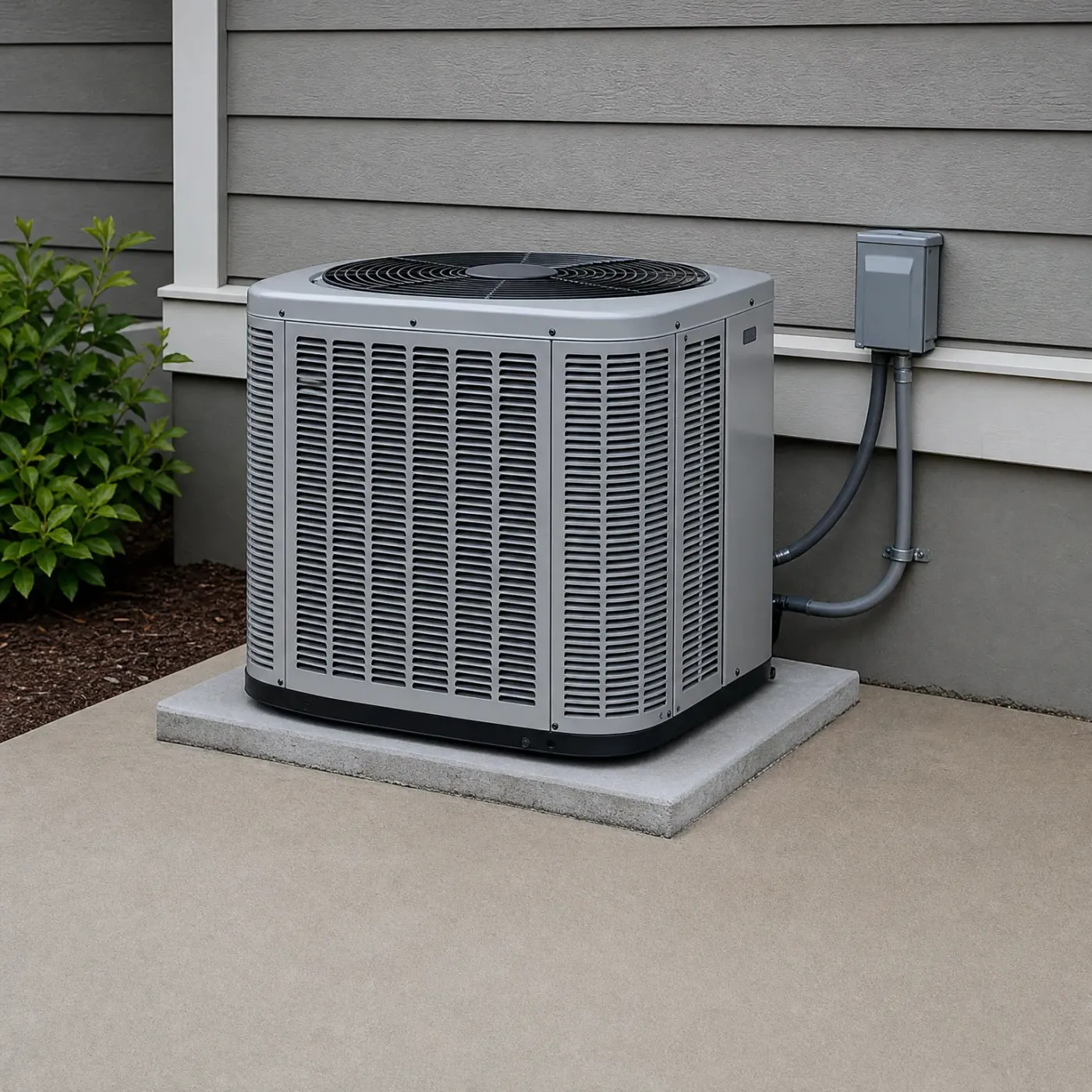
A gray outdoor condenser unit on a concrete pad beside a house with gray lap siding, connected by conduit and refrigerant lines to a wall-mounted disconnect box, with a green shrub and mulch bed at left.

Running the way it should

A heat pump in good shape cycles on, moves air, and shuts off without drama. The disconnect box and wiring stay dry and secure, the pad underneath stays level, and the unit keeps up on the coldest Webster County mornings without running nonstop.

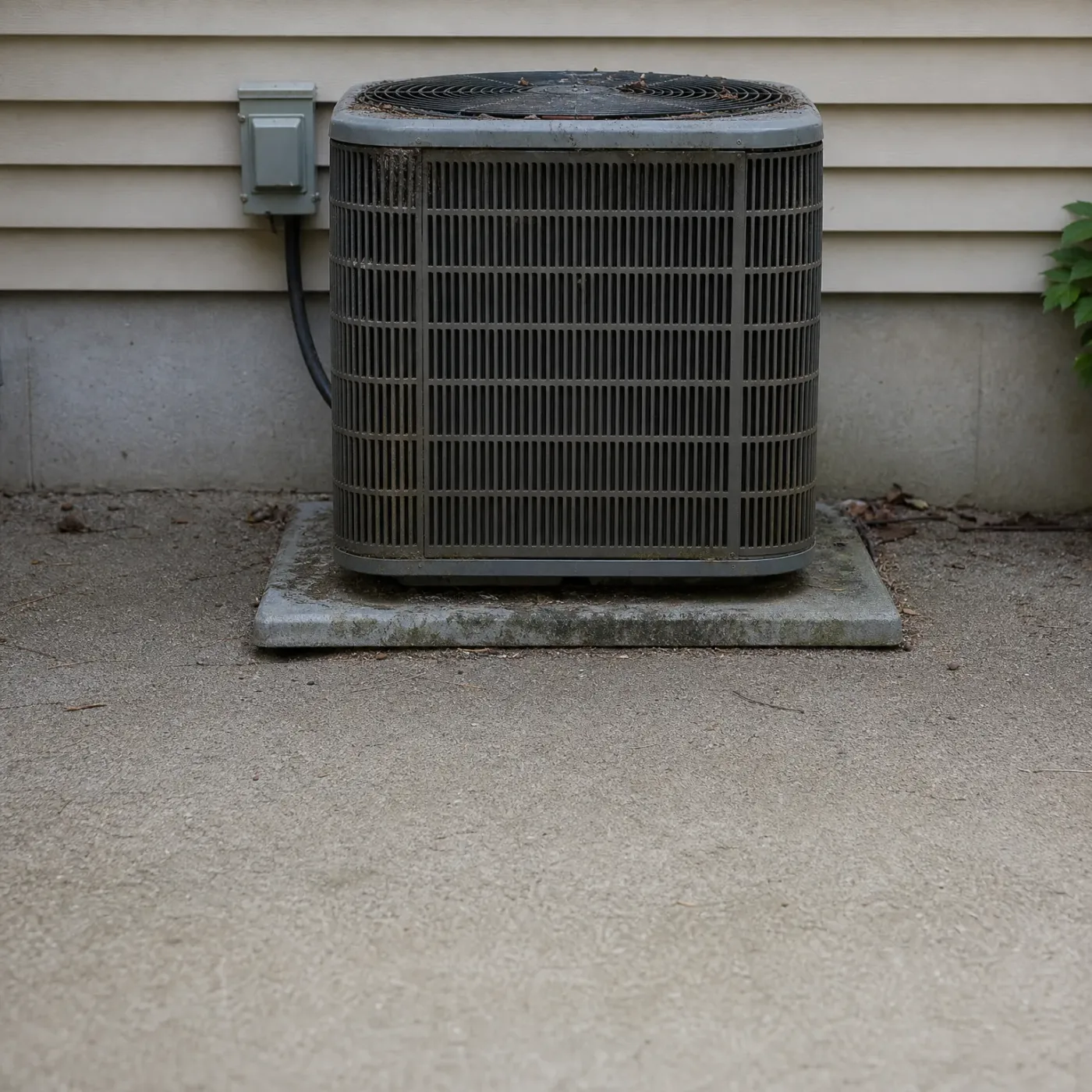
An outdoor air conditioning or heat pump condenser unit on a concrete pad beside a house with horizontal vinyl siding, a gray electrical disconnect box and conduit on the wall, and a concrete walkway in the foreground.

Signs it's falling behind

Dirt caked on the cabinet, ice that won't clear, or a unit that runs long and still can't hold the temperature are signs it's losing ground. If yours is struggling like this heading into another Fort Dodge winter, it's worth having someone look before it quits.

What does a Fort Dodge winter actually ask of your heat pump?

  • Winter nights average 13°F

    Overnight lows average 13°F here in December, January and February, and your heat pump has to pull heat from air that cold every night.

  • Heat runs October through May

    Heat runs October through May here, about eight months. That's most of the year your heat pump is the thing keeping the house warm.

  • Cooling runs June through August

    Cooling only runs June through August here. Your heat pump spends more months heating than cooling, so winter wear is what shortens its life.

NOAA nClimDiv 1991-2020

The backup heat strips are working overtime

Every heat pump has electric strips that kick in when the outdoor air gets too cold for the compressor to pull heat from it. On a system in good shape, those strips only help out on the worst nights. When a heat pump is wearing out, the compressor can't keep up as well, so the strips run more and more of the time. You'll see it on your electric bill before you see it anywhere else, since those strips use far more power than the compressor does on its own.

It's lagging behind the thermostat

Set the thermostat to 70 and a working heat pump gets there and holds it, even on a 13°F morning. A unit that's failing starts to lose that ground. It might get the house to 66 and stall, or take an hour longer than it used to for the same few degrees. In Webster County, where heat runs from October into May, that gap shows up fast, because the system doesn't get much of a break to hide the problem.

A gray-haired bearded man in a dark coat and scarf dusted with snow stands smiling in a dimly lit entryway with a white front door, a side table with a lit lamp, an oval mirror, and a patterned rug.
An older bearded man in a dark snow-dusted coat and gray scarf stands just inside a dimly lit home entry, with a framed picture, lit table lamp, and an adjoining room with a fireplace behind him, and snow visible through the open door.
A gray-haired, bearded man in a dark snow-dusted coat stands smiling in a dimly lit entry hall with a staircase, a lit table lamp, a framed picture, and a living room visible through a doorway.
An older man with gray hair and a beard, wearing a dark jacket dusted with snow, stands smiling in a dimly lit hallway with lamps and a living room visible behind him.

A pro who works on heat pumps

A licensed installer who works in Webster County gets your project.

You're not committing to anything by asking.

Knowing When It's Time

  • A heat pump past ten to fifteen years old and struggling in a Webster County winter is usually worth replacing rather than repairing again.
  • Backup strips running most winter nights instead of only the coldest ones point to a compressor that can no longer keep up.
  • Rising power bills with no change in how you run the system often mean the unit is working harder to do the same job.
  • Repeated repairs on the same parts cost more over time than one installation that stops the breakdowns.
  • A heat pump that short cycles, runs loud, or can't hold the house steady through October to May heating is nearing the end of its service life.
  • If the disconnect box, wiring, or pad show wear alongside weak performance, the whole system is aging, not just one part.

The signs add up rather than standing alone. Age matters most. A heat pump ten to fifteen years old that's already calling for repairs has less runway left than the repair bill suggests, especially after a hard Webster County winter. Watch how the backup strips behave. They're built for the worst nights, not every night, and if they're kicking in through an ordinary October or January evening, the compressor isn't doing its share of the work anymore. Your power bill tells a similar story. If it's climbing while your habits haven't changed, the system is spending more energy to deliver the same heat or the same cooling, and that gap tends to widen rather than close. Repairs follow a pattern too. The same part failing more than once is the system telling you where it's weak, and a second or third repair on that part usually costs more over its lifetime than replacing the unit once. Listen to how it runs. Short cycling, unusual noise, or rooms that won't hold steady from October through May all point to a system working past its limits. And look past the unit itself. Wear on the disconnect box, the wiring, or the pad it sits on is rarely isolated. It usually means the whole installation has aged together, not just the one part giving you trouble now.

A woman wrapped in a thick beige fleece blanket sits on a sofa with an open book on her lap, beside a lit table lamp, with a frost-covered window behind her.
A smiling older woman with gray hair in a cream knit sweater stands in a dimly lit kitchen beside a window showing snow outside, with a round loaf of bread on the counter in the foreground.

Get your heat pump to the right pro

A heat pump in Webster County earns its keep eight months a year, and an aging one shows it first on the coldest nights, when the backup strips carry more than they should and the power bill reflects it. Ten to fifteen years is the point to weigh replacement against another repair bill. A local contractor who services this equipment every winter can look at your system and tell you honestly which way that math goes. Request a match and one licensed contractor in Fort Dodge will reach out, not several.

Find a licensed heat pump pro

The pro who gets in touch is licensed in Iowa and works in Webster County.

It costs nothing to send, and you don't have to hire anyone.