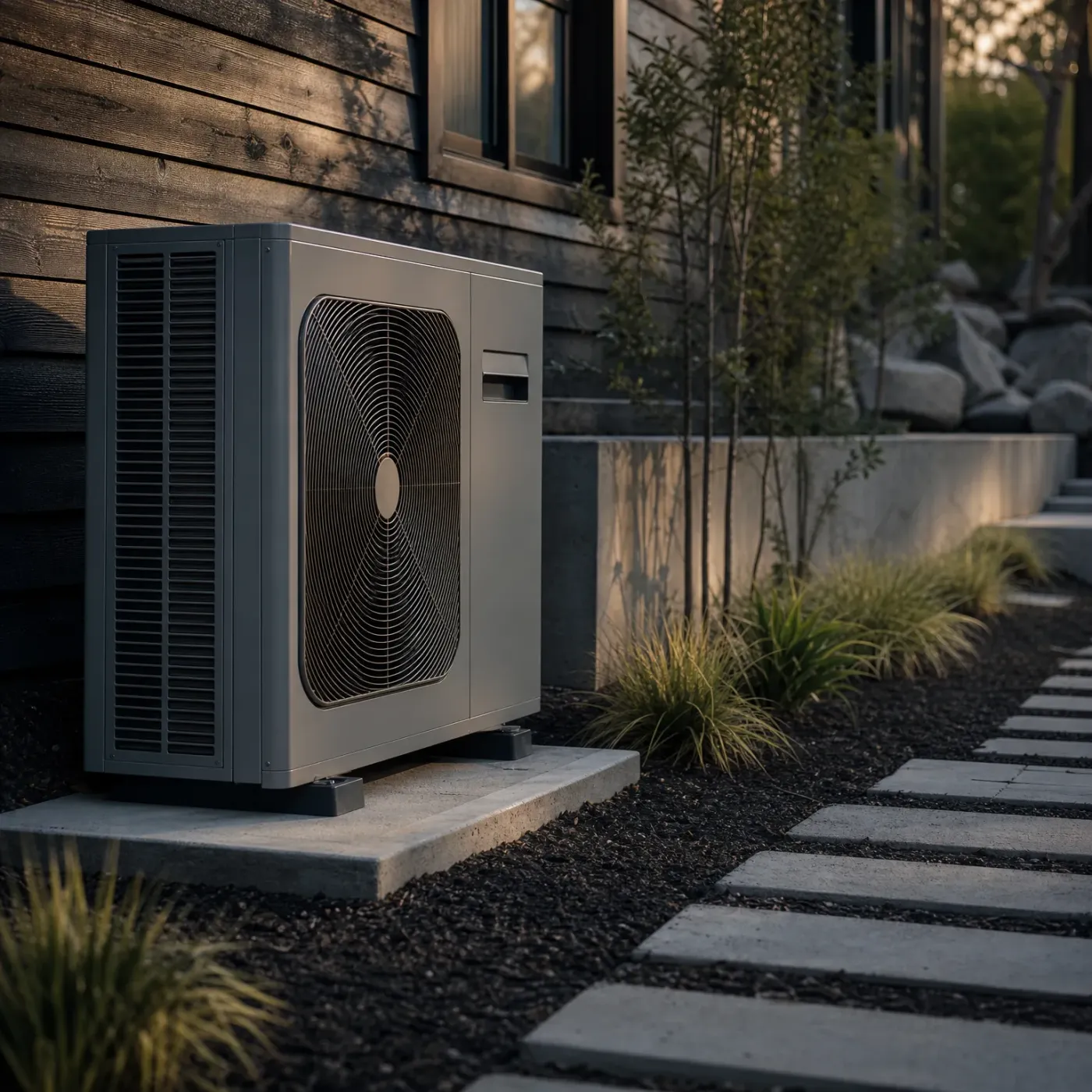




A gray outdoor heat pump unit with a circular fan grille sits on a concrete pad beside a dark wood-clad house, next to a gravel bed with ornamental grasses and a stepping-stone path.

Matched to your heat pump job

Why your heat pump is blowing lukewarm air in Iowa

Lukewarm air from a heat pump usually means it's stuck in a mode it can't finish, not that it's broken outright. This page gets into why that happens, what it means for a system running through an Iowa summer, and what to check before you assume the worst. A local contractor who works on these year-round can tell you what's actually going on.

Find a pro near me

Lukewarm air usually means your heat pump is running but losing the fight to move heat the way it should. In summer that's often a refrigerant charge that's dropped low, a condenser coil outside caked with dirt or grass clippings, or a compressor that's struggling to keep up. Iowa summers push these systems hard for months at a stretch, and a unit that's been low on refrigerant for a while won't just blow cooler air, it'll run longer to get there, which shows up on your electric bill before anything fails outright. It can also be simpler: a dirty air filter cutting off airflow, or a fan motor that's slowing down. None of these fix themselves, and running the system while the charge is low can wear on the compressor, which is the expensive part to replace. The air isn't cold because something specific in the system isn't working the way it was built to. Worth having someone check it before the hottest stretch of summer puts more strain on it.

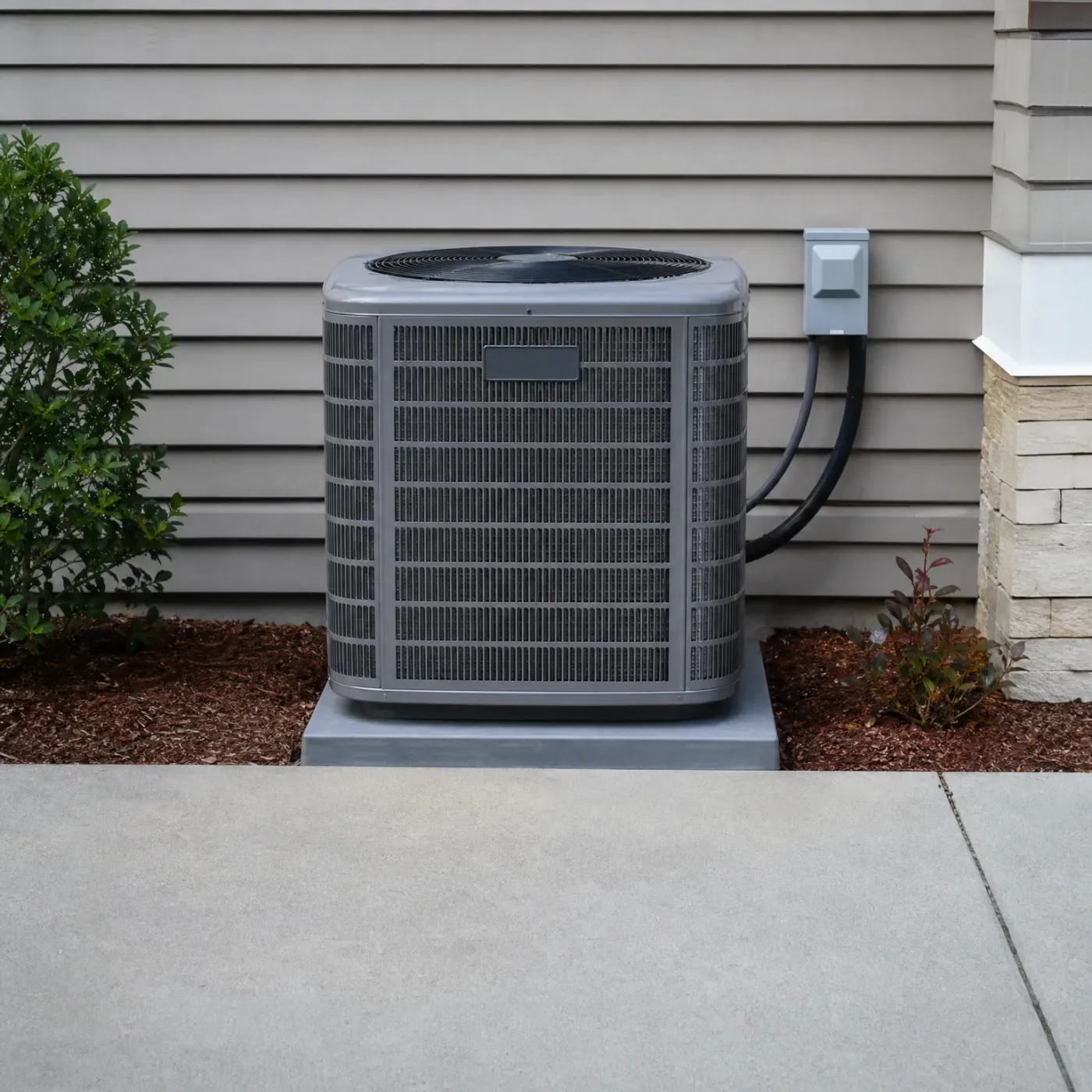
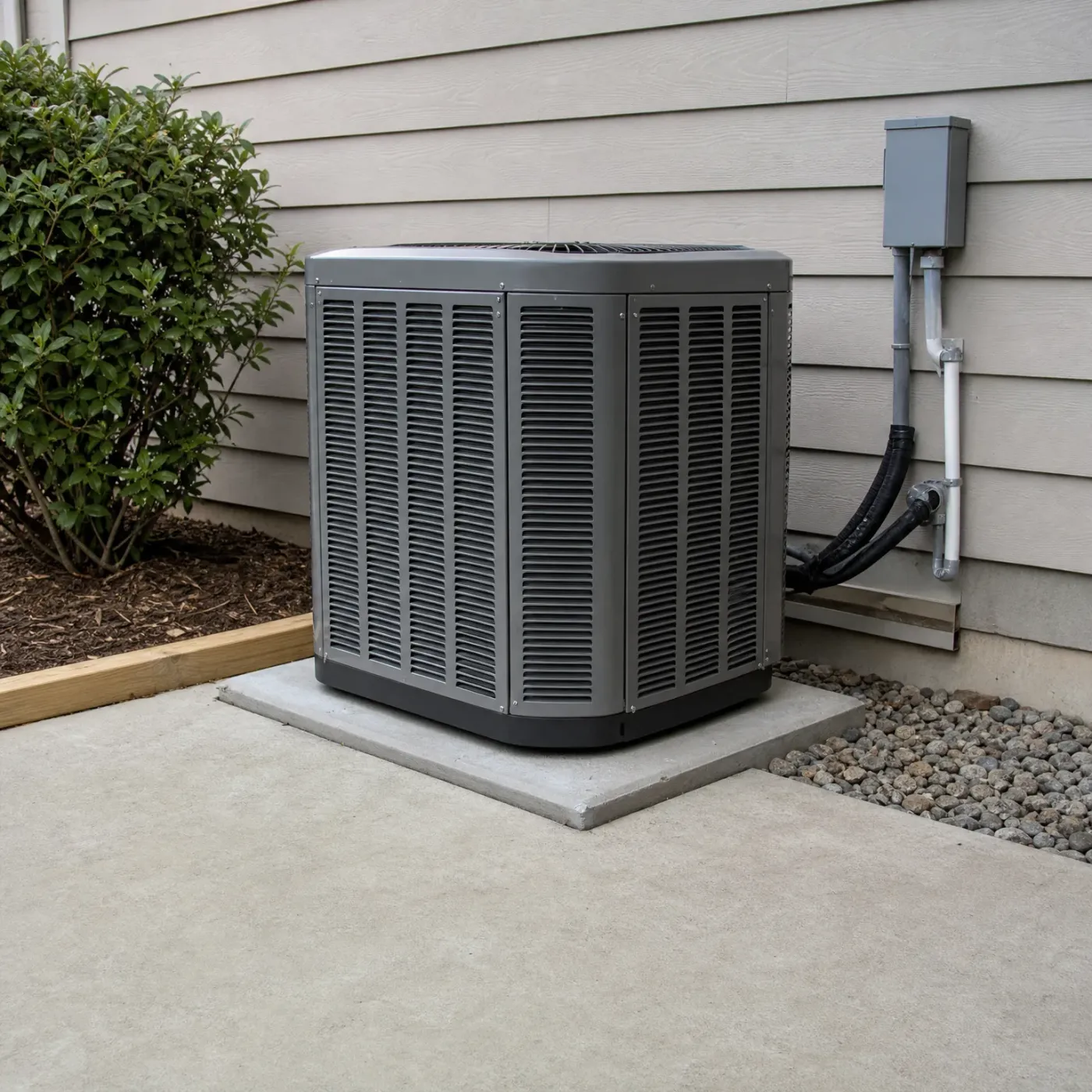
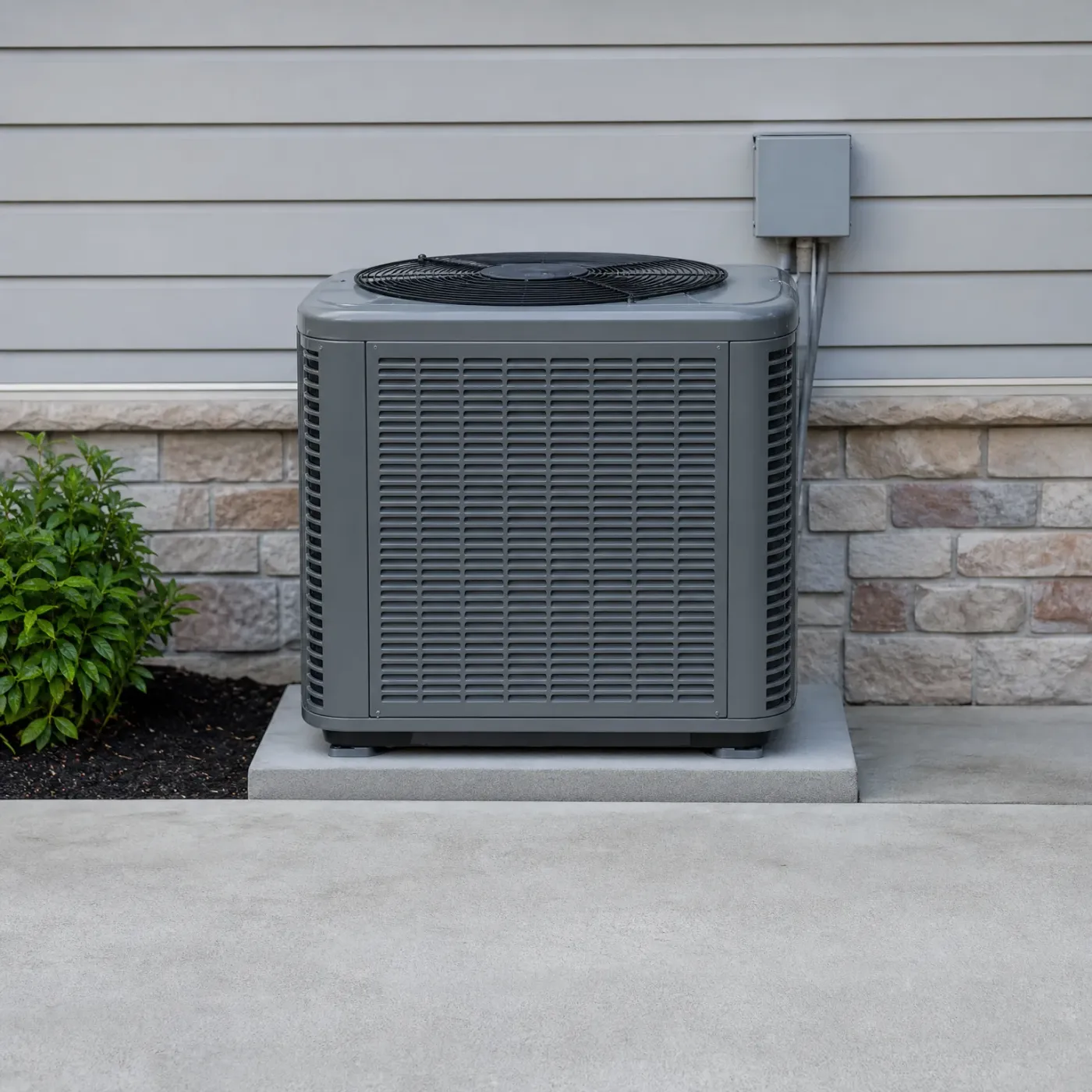
A gray outdoor condenser unit on a concrete pad beside a house with horizontal lap siding, with a wall-mounted disconnect box, conduit and insulated refrigerant lines, a shrub at left and gravel at right.
Lines and conduit run clean to the disconnect box, and the unit cycles through a normal cooling run without strain.
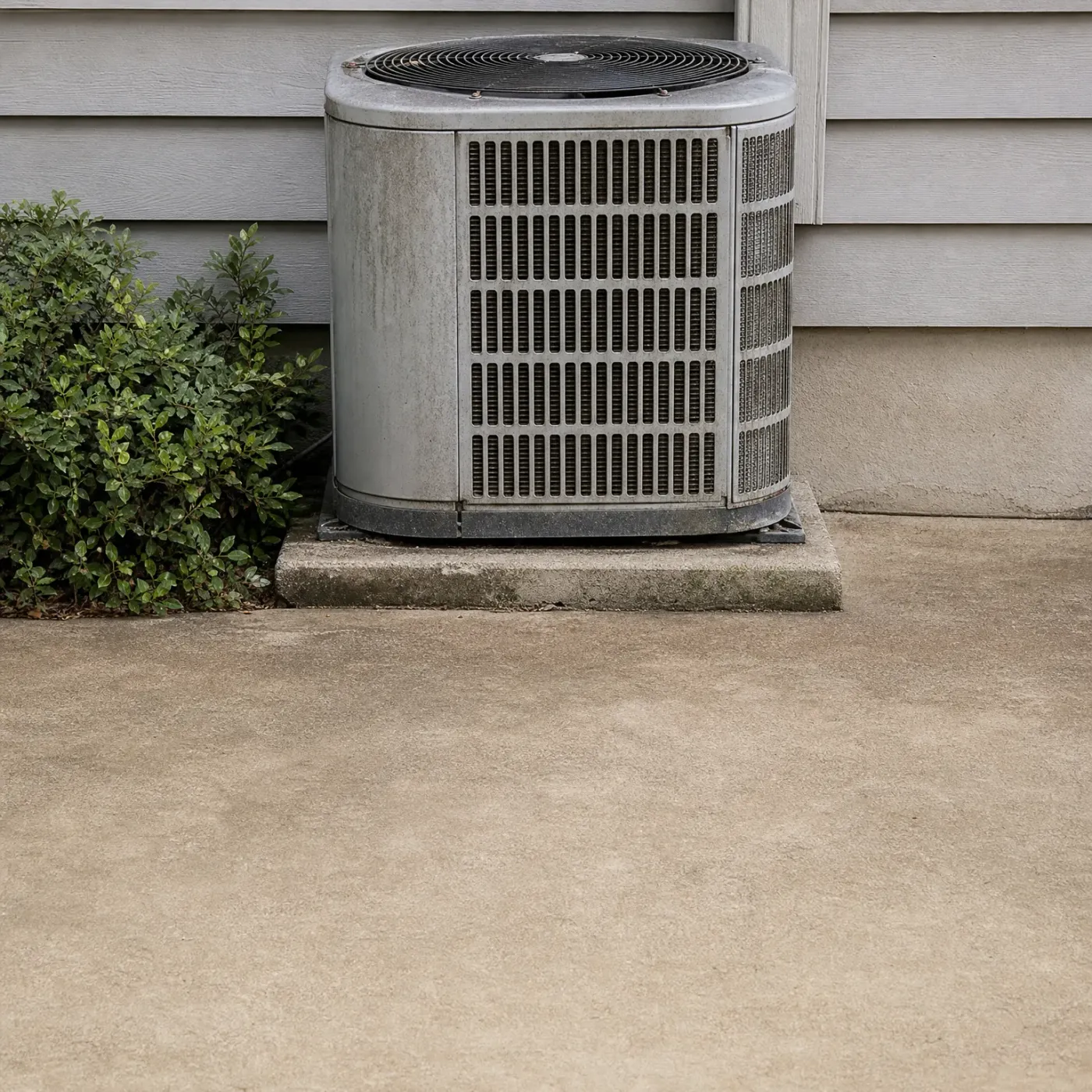
An outdoor air conditioning condenser unit on a concrete pad beside a house with horizontal lap siding, with a green shrub to the left and a wide concrete slab in the foreground.
Same pad, same siding, but air coming off the coil stays lukewarm no matter how long the system runs.

Your heat pump doesn't burn anything to make heat. It moves heat from one place to another using refrigerant, and that only works if the charge is right and the valves are doing their job. The reversing valve decides whether the system is heating or cooling, and when it's stuck between the two, the unit keeps running but can't settle into either one. That alone can turn out lukewarm air for days before anyone notices. A compressor that short-cycles, kicking off before it builds real pressure, has the same effect. So does a condenser coil outside that's caked with grass clippings or dirt. It can't shed heat the way it needs to, so the refrigerant stays too warm to do its job on the indoor side. In a humid Iowa summer, that strain shows up early. A coil that's only half blocked doesn't shut the system down. It just quietly stops keeping up, and the air coming through the vents tells you before anything else does.

What's Actually Happening Inside

  • A heat pump moves heat instead of making it, so it needs a full refrigerant charge to pull enough warmth from the outside air or push enough out of the house.
  • The reversing valve is what switches the system between heating and cooling, and when it sticks halfway the unit runs but can't fully commit to either mode.
  • A compressor that's short-cycling on and off before it builds enough pressure will push air that feels lukewarm rather than properly cold or hot.
  • Outdoor coils covered in dirt, grass clippings or leaves can't release heat efficiently, so the refrigerant inside stays too warm to cool the air passing over the indoor coil.
  • Low refrigerant almost always comes from a leak somewhere in the line set or coil, not from the system simply using it up over time.
  • Iowa's humid summers mean a coil that's even partly blocked has to work harder just to keep up, which shows up first as weaker, warmer air rather than a total shutdown.
A man with grey hair and stubble in a dark sweater sits on a grey sofa indoors, looking off to the side, with a potted plant and a sunlit window behind him.
A man with gray hair, a beard and glasses, wearing a dark green sweater, sits on a gray sofa in a sunlit living room with a potted plant, table lamp and wooden sideboard behind him.
A middle-aged man with graying hair and a short beard sits on a blue sofa in a living room, looking toward a window, with a bookshelf, lamp and framed picture in the background.
A man with graying curly hair and a dark green sweater sits on a gray sofa in a sunlit living room, looking off to the side, with a framed picture, shelving, an armchair and a window with sheer curtains behind him.

What the outdoor unit is fighting

Iowa summers run hot and humid enough that a heat pump's outdoor coil has to shed heat into air that's already thick with moisture. A coil that's clean and a charge that's full can still keep up with that. A coil caked with cottonwood fluff or cut grass can't, and the system ends up moving warm, damp air across it instead of rejecting heat the way it should. The result shows up inside as air that never gets properly cold, even though the blower is running and the thermostat says it should be.
Why gas heat changes what you notice

Most houses in Iowa heat with a gas furnace and use the heat pump only for cooling, so a stuck reversing valve or a low charge rarely gets noticed in winter. Summer is when it gets caught, because that's the only season the heat pump is asked to do real work. A system that's quietly lost some refrigerant over the years can still blow air and still cycle on schedule. It just can't pull enough heat out of the house to bring the temperature down the way it used to.

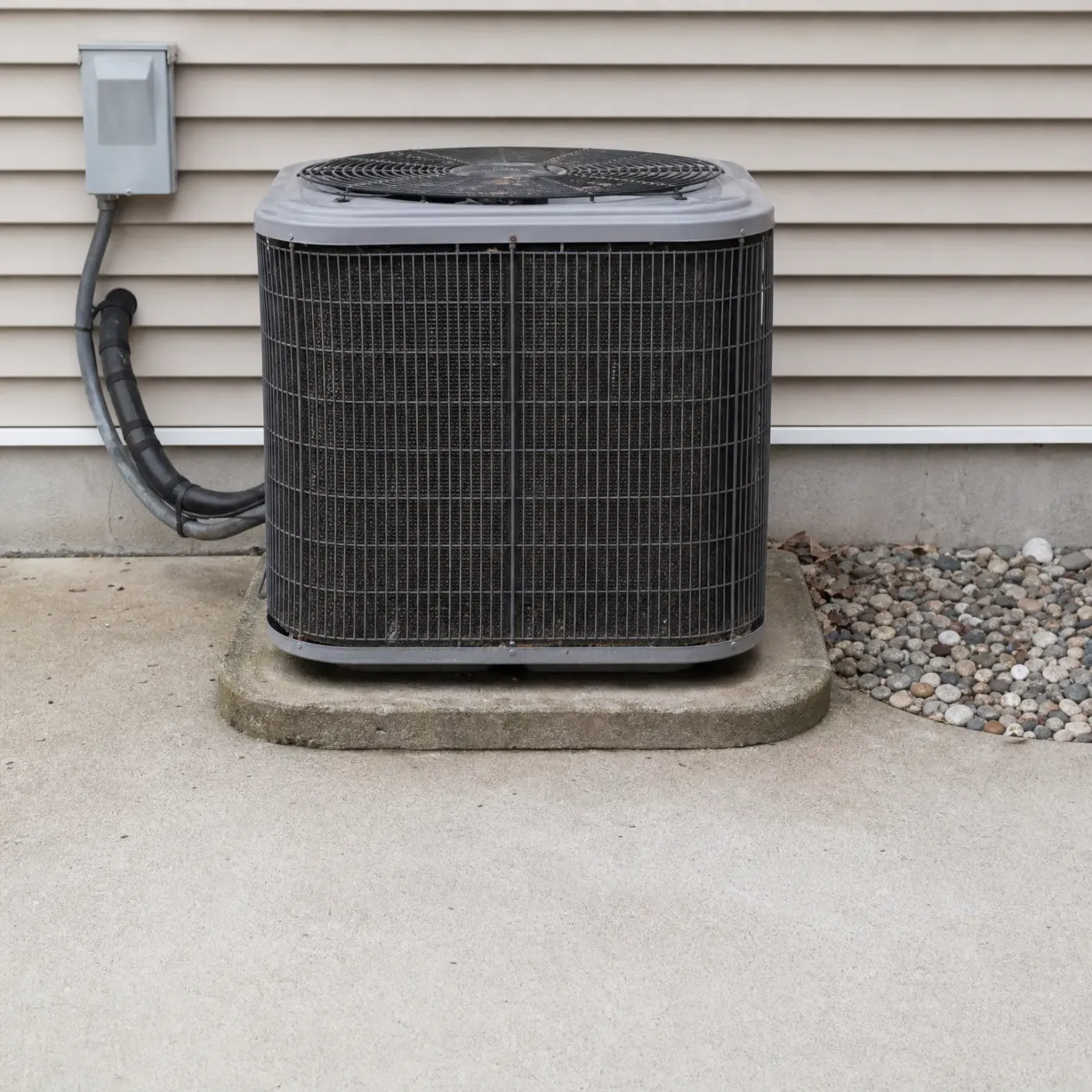
An outdoor air conditioner condenser unit on a concrete pad beside a house with beige vinyl siding, with a gray electrical disconnect box and insulated refrigerant lines on the wall and river rock to the right.
Before you get your heat pump repair
A gray outdoor condenser unit sits on a concrete pad against a house wall with horizontal siding above a stone veneer base, with an electrical disconnect box and conduit on the wall and a leafy shrub in mulch to the left.
After you get your heat pump repair

A heat pump pro near you

A heat pump blowing lukewarm air through a humid Iowa summer isn't a problem that waits politely. Every extra week it runs low on charge or fights a dirty coil, the compressor works harder than it was built to, and that's the part that costs the most to replace if it gives out. You don't need to know whether it's the reversing valve or the charge before someone looks at it. You need someone who works on heat pumps in this state all summer, who's seen what grass clippings do to a condenser coil and what a sticking valve feels like at the thermostat, and who can tell you which one you're dealing with. That's one licensed contractor near you, not a handful competing for your number. Send the request and that's who follows up, with a sense of what's likely before they even see your unit.

What you'll notice day to day

The air coming out of the vents will feel closer to room temperature than cold, and it'll stay that way whether the system has run for ten minutes or two hours. Upstairs rooms or whichever part of the house is hardest to cool will lag the most. You may hear the outdoor unit running the whole time, not cycling off, because the thermostat keeps calling for cooling it isn't getting. Some homes notice the air feels damp even when it's moving, since a heat pump that isn't pulling heat out properly also isn't pulling much moisture out. None of this means the system is off. It means it's working without getting anywhere.

What it does to your summer bill

A compressor straining against a low charge or a dirty coil draws more power to do less cooling, and in Iowa that strain runs for months, not days. Power here is cheap compared to a lot of places, which softens the hit, but it doesn't erase it. The bigger risk is what happens to the compressor itself if it keeps running this way. That's the part that's expensive to replace, and a heat pump that's always fighting to move heat is a heat pump wearing that part down faster than it should. A contractor who works on these systems every summer in Iowa knows which of these it usually is before they even open the panel, and can get the charge or the valve or the coil sorted before the compressor is the problem.

Power costs 13.62 cents per kilowatt-hour statewide

At 13.62 cents a kilowatt-hour, running a heat pump here doesn't cost much to begin with. That's exactly why a unit blowing lukewarm air is wasted money twice over, paying to run a compressor that's straining and still not cooling the house.

EIA-861 2025 statewide residential average

A gray outdoor condenser unit sits on a concrete pad beside a house with horizontal lap siding, with a wall-mounted disconnect box and refrigerant lines, mulched beds and a shrub nearby, and a concrete walkway in the foreground.

Running the way it should

Conduit runs clean from the unit to the disconnect box, nothing rigged or patched. A system like this cycles on, cools the house, and shuts off again without strain. That's what a licensed tech is restoring, not guessing at.

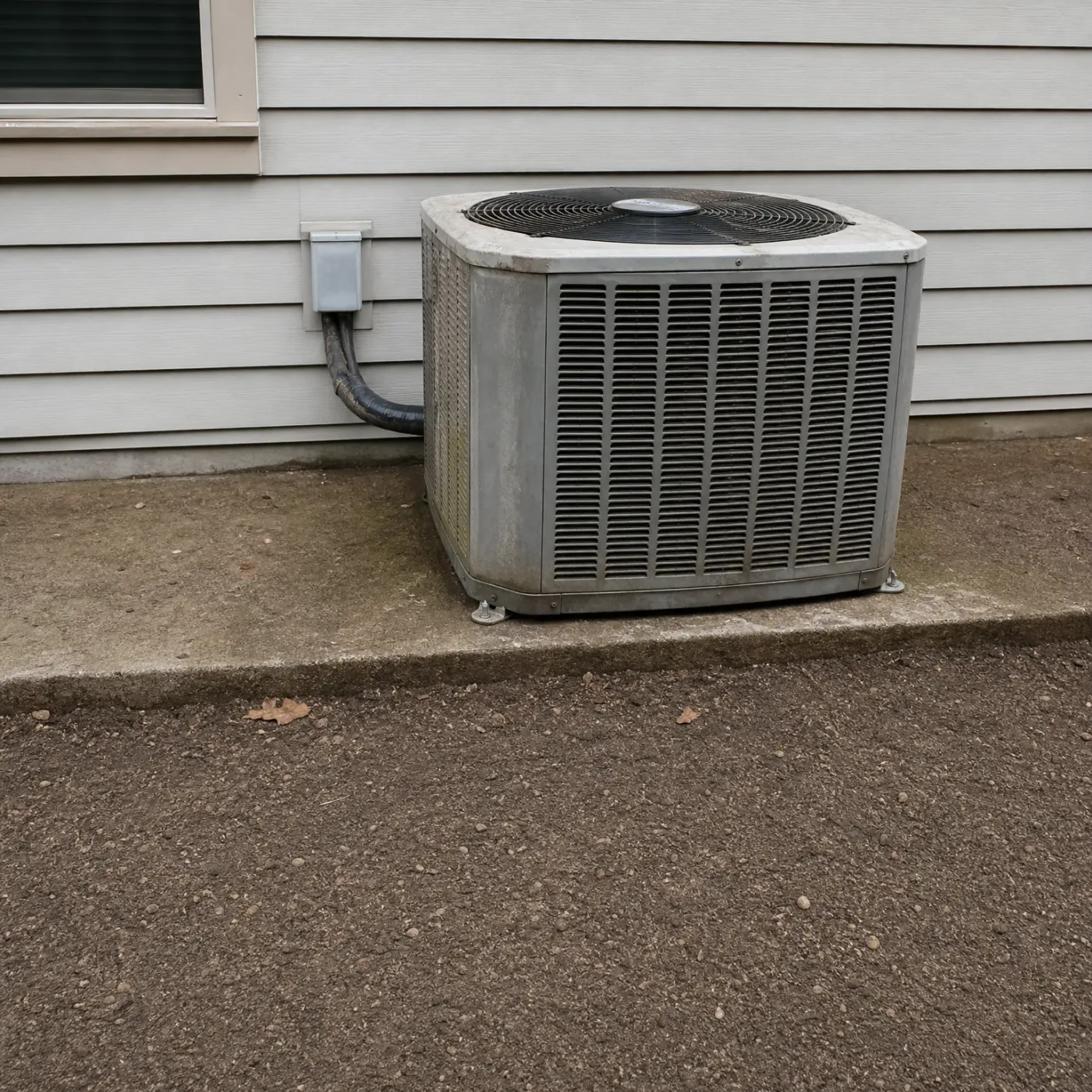
An outdoor air conditioner condenser unit on a concrete pad beside a light gray vinyl-sided house, with an electrical disconnect box and conduit on the wall and bare soil in the foreground.

Working harder than it should

Lines and conduit reach the same kind of disconnect box, but the coil underneath isn't keeping up. A local contractor who services heat pumps all summer has seen this exact setup fail the same few ways, and knows where to start looking.

Call Now or Wait It Out

Call now

  • A heat pump that's low on charge or fighting a dirty coil is still running its compressor hard every time it cycles, whether or not the house feels cool.
  • The longer a compressor strains against a stuck reversing valve or a low charge, the more likely it is to fail outright instead of just underperforming.
  • A licensed tech local to Iowa who works on heat pumps every summer knows which of these failures shows up most and checks for it first.
  • Getting matched with one contractor means one visit scheduled and one set of hands on the unit, not a string of callbacks while you wait.
  • If the coil is just dirty, that's a straightforward fix now, before the compressor has spent weeks compensating for it.

Wait it out

  • The unit will likely keep running and keep producing some cool air, just not enough to keep up on the hottest, muggiest days.
  • A compressor that's already straining against a low charge doesn't recover on its own, it keeps working against the same problem every cycle.
  • Power here is cheap, but a straining compressor still pulls more than a healthy one while delivering less cooling for it.
  • Waiting doesn't tell you whether the problem is a simple coil cleaning or a failing part, so you're guessing the same as before.
  • If the cause is a stuck reversing valve, it won't loosen up with time, and the system stays split between modes until someone opens it up.
A woman with shoulder-length brown hair wearing a beige knit cardigan sits in a gray upholstered armchair near a window, looking off to the side with a slight smile, with bookshelves blurred in the background.
A woman with her hair in a bun holds a sleeping young child against her chest, both wrapped in a textured beige knit blanket on a sofa in a dimly lit room with a lamp, framed picture, and bookshelf behind them.
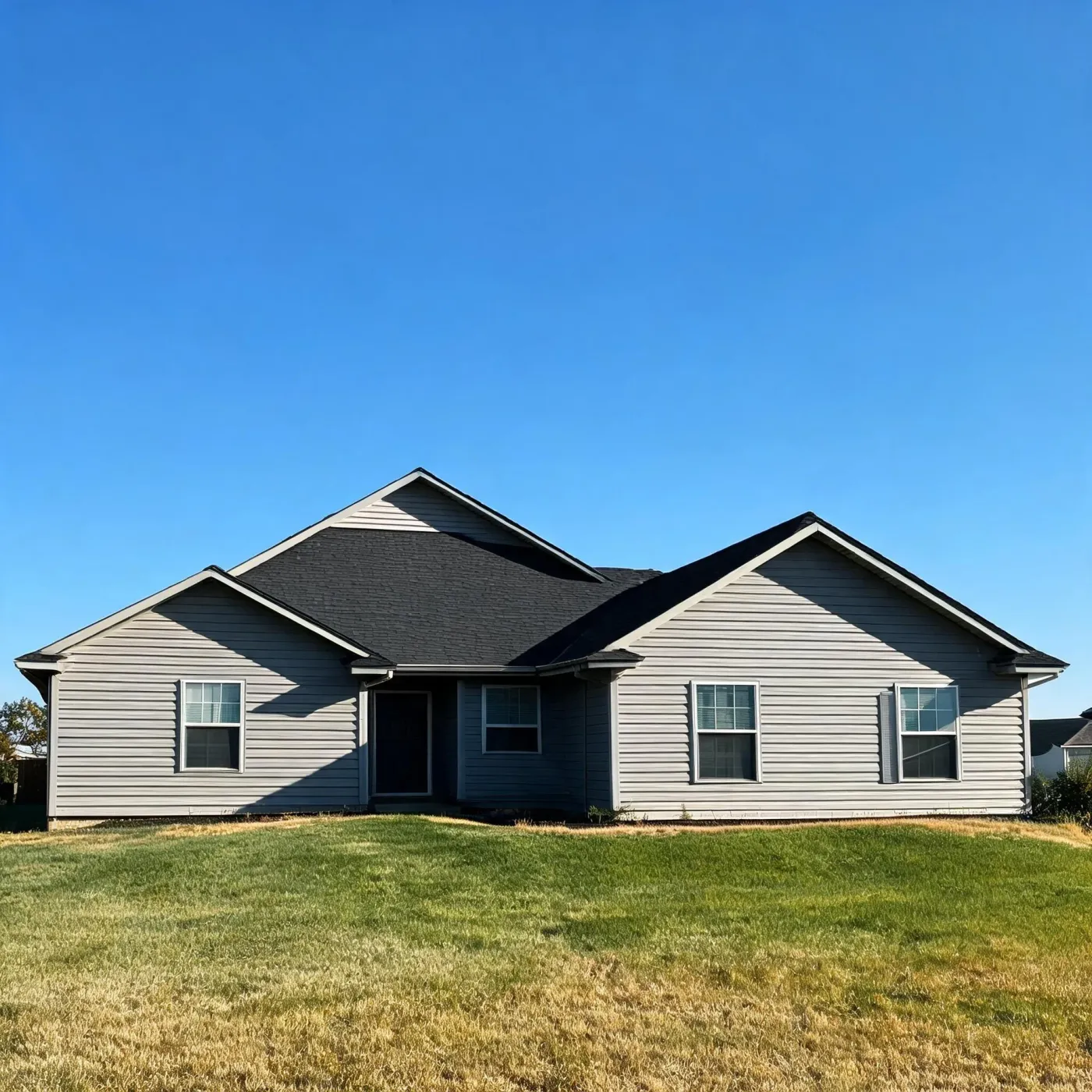
A single-story house with gray vinyl siding, dark shingled gable roofs, and white-trimmed windows, set behind a partly dry green lawn under a clear blue sky.

That 62°F dew point is what the outdoor coil is up against all summer. Air that heavy holds onto its heat, so the coil has to work through moisture just to shed warmth into it. A heat pump with a full charge and a clean coil handles that fine. One that's already low on refrigerant or caked with grass clippings runs out of margin fast, and that's when it starts blowing air that's cooler than room temperature but nowhere near cold. You'd notice it most on the muggiest days, when the system runs long and the house still doesn't feel right.

Source: NOAA climate normals for Iowa.

NASA POWER T2MDEW county cells weighted by homes

A smiling man in a denim shirt and white t-shirt stands in an open dark doorway of a stucco house, facing a woman with long brown hair and a green jacket seen from behind in the foreground.

Lukewarm air means something specific is wrong, not everything

A heat pump blowing lukewarm air through an Iowa summer is pointing at one of a few things: a low charge, a dirty coil, a reversing valve that's stuck, or a compressor straining under one of those. It isn't pointing at all of them at once, and it isn't a sign to replace the unit before anyone's looked at it. A tech who knows these systems can usually tell which one it is by how the unit runs, what the lines feel like, and what the pressures read.

That's the part worth getting right, because the fix is different depending on which it is, and guessing wrong wastes a service call. Iowa has techs who work on heat pumps all summer and know which of these tends to show up first in a system like yours. Getting matched with one means someone local looks at your unit specifically, not a general callout. You'll hear from them directly once you request service.

Interior corner of a room with a window and sheer curtain at left, a gray upholstered sofa with a cushion at right, and a round wooden table holding stacked books and a round vase with an olive branch.
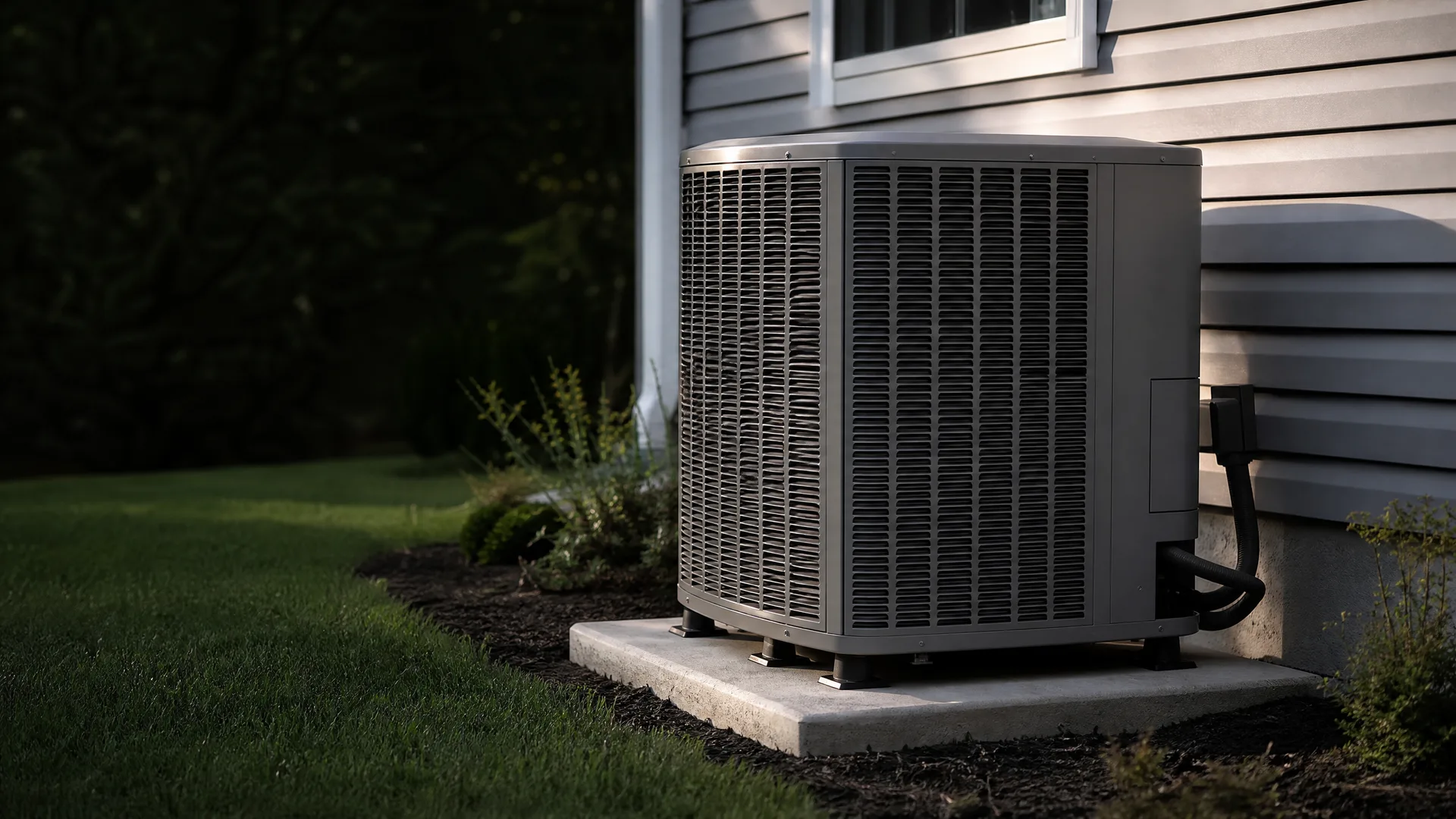
A gray outdoor condenser unit on a concrete pad beside a house with horizontal lap siding, bordered by mulch, shrubs and a mowed lawn.

A local pro for your heat pump repair

Step 1 of 3: Equipment