





Profile view of a bearded man wearing a black baseball cap and a dark gray T-shirt against a plain light background.

Why your heat pump is leaking water in Iowa

Step 1 of 3: Equipment

Water pooling near your indoor unit usually means condensate the system pulled from the air isn't draining the way it should. Your heat pump produces that moisture any time it's cooling, and with Iowa summers running sticky, there's a lot of it to carry away. The condensate line can clog with algae and dirt, the drain pan can crack or rust through, or the pan can overflow because the line is blocked or pitched wrong. In winter, a heat pump that's frosting over more than it should will drip as that ice melts, which points to a different problem with the defrost cycle instead of the drain. Either way, water where it shouldn't be is the system telling you something inside isn't working as it's supposed to. Left alone, it can soak flooring, stain ceilings below, or trip a safety switch that shuts the system off entirely.

A woman in a knitted shawl sits in a living room with a fireplace, shelves, a sofa with cushions, and a lamp by a bright window, looking off to the side.
A woman with long brown wavy hair in a green shirt over a white top stands in a living room with built-in white shelves, a ceiling fan, a potted plant and a sliding glass door.
A woman with shoulder-length gray-streaked hair in a light gray knit sweater stands smiling and looking off to the side in a living room with a sofa, houseplant, framed picture, and sunlit sliding glass door.
A woman with shoulder-length curly gray hair wearing a gray knit sweater stands near a window with a sheer curtain, looking to the side, with a blurred interior room behind her.

Where the water actually goes

Inside your indoor unit, the evaporator coil sits above a drain pan built to catch condensate as it drips off the coil. From there it runs down a drain line, usually PVC pipe, out to a spot outside or into a floor drain. That line is narrow, and it only takes a clog of algae or dust to back the water up into the pan until it overflows. Check where that line ends outside your house. If nothing is dripping from it while the system runs, the water is backing up somewhere between the coil and the outdoors instead of leaving the house the way it's supposed to.

What a cracked pan means

If the drain line is clear and water is still pooling, the pan itself may be the problem. Pans crack with age, especially where they sit under constant moisture through a sticky Iowa summer. A cracked pan leaks no matter how clean the drain line is, since the water never makes it that far before finding a gap in the pan and dripping straight down. A low refrigerant charge can also cause this, because it lets the coil frost over; when the system shuts off and that frost melts, it can dump more water than the pan and drain line were built to handle at once.

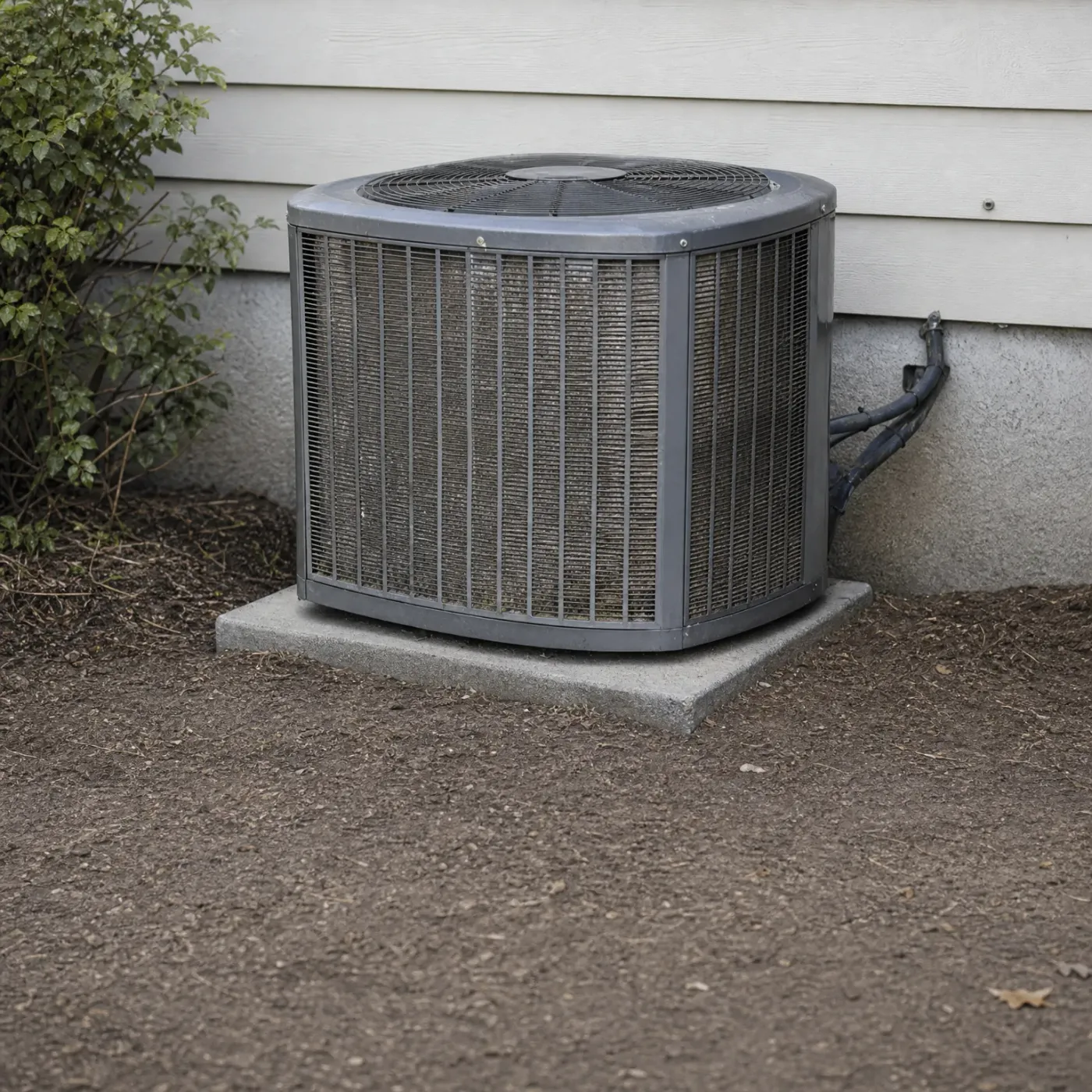
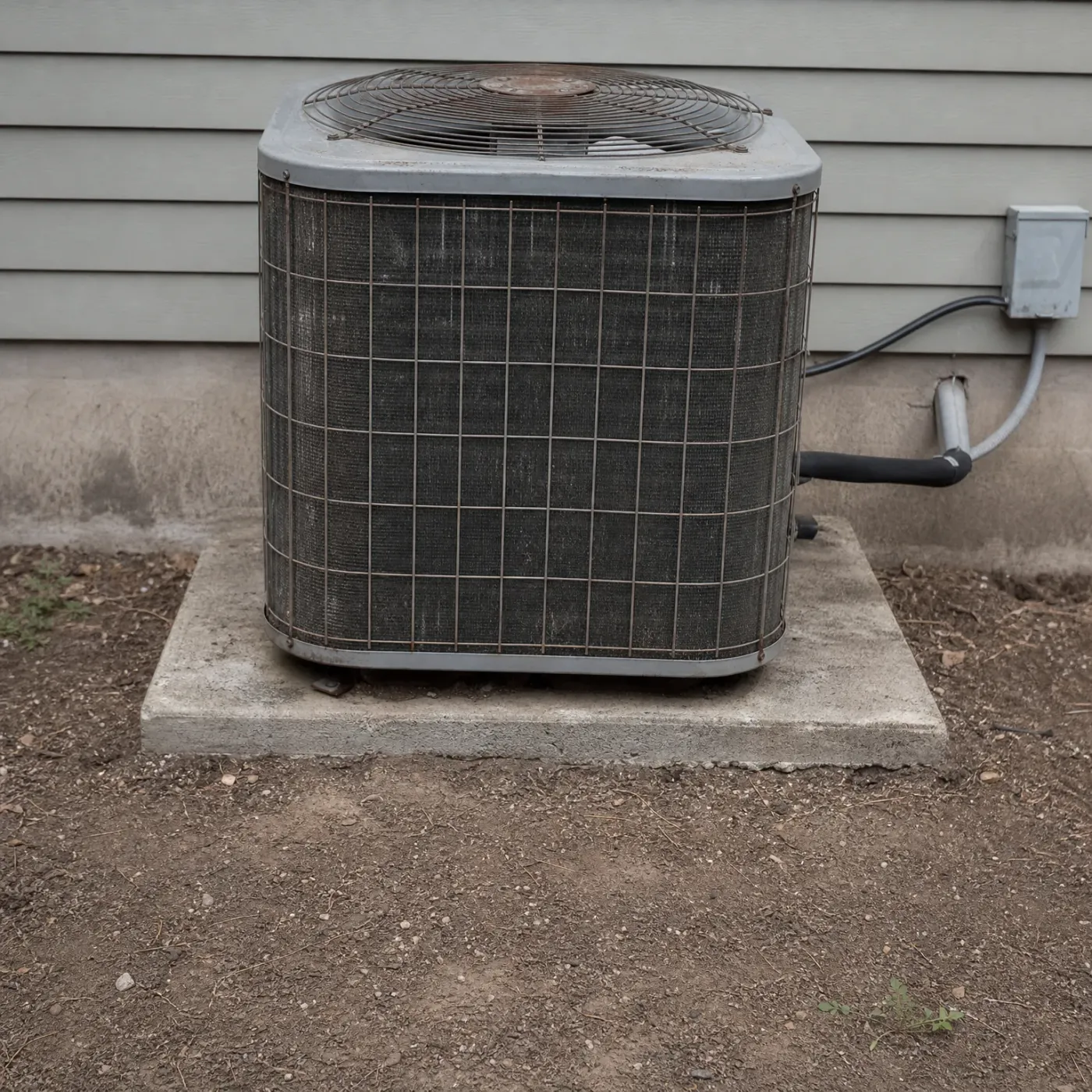
An outdoor air conditioner condenser unit on a concrete pad beside a house with horizontal lap siding, with refrigerant lines entering the wall and a shrub on bare soil to the left.
Before you get your heat pump repair
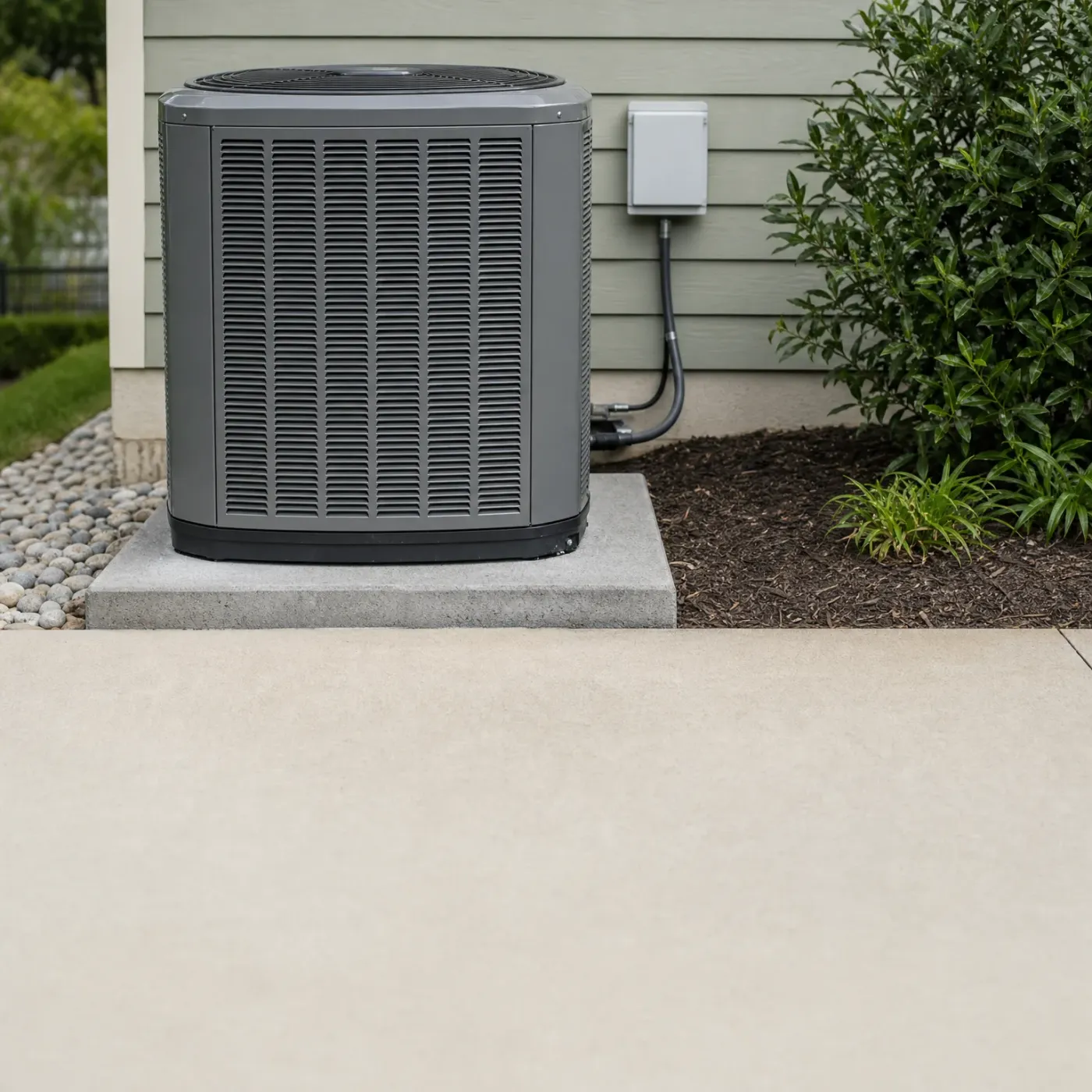
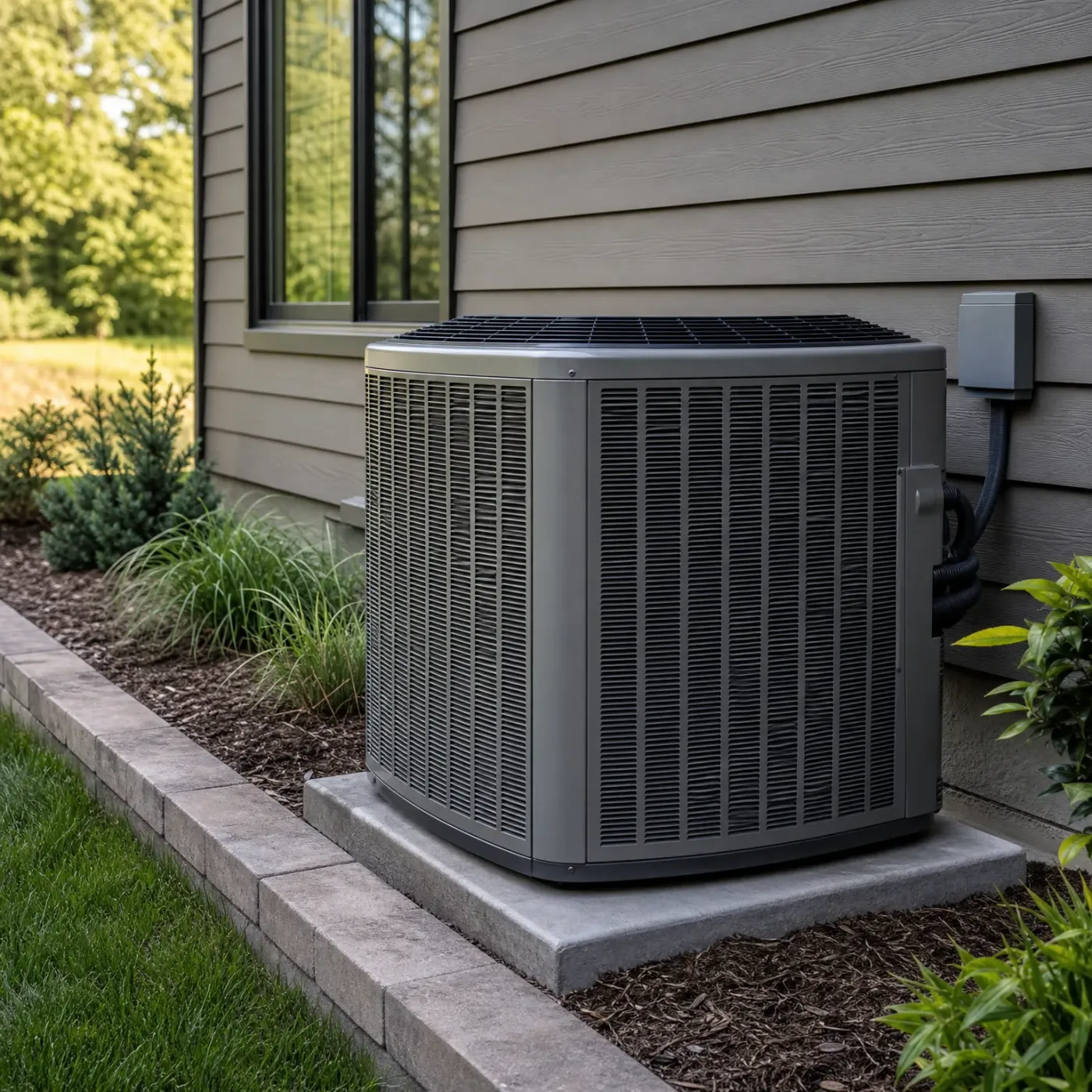
A gray outdoor condenser unit on a concrete pad beside a light green lap-sided house, with a wall-mounted electrical disconnect box, mulch bed with shrubs, river rock, and a paved walkway in the foreground.
After you get your heat pump repair

Most leaks trace back to the drain line getting blocked. Algae and dust build up inside that PVC pipe over months of summer use, and eventually water backs up instead of running out. Sometimes the pan itself is the problem. If it's cracked or rusted through, water drips out before it ever reaches the line. A frozen coil is another common cause. A dirty filter restricts airflow across the coil until ice forms, and when the system shuts off or the ice melts, that water ends up on your floor instead of in the drain. If your unit has a condensate pump and it's failed, water has nowhere to go but back up into the pan. Sometimes the drain line was never sloped enough to begin with, so water just sits instead of flowing downhill like it should. And occasionally the real issue is a refrigerant leak low enough to cause icing, which only becomes obvious once that ice melts and shows up as water on the floor.

What's actually causing the leak

  • A clogged drain line is the most common cause, usually algae or dust buildup narrowing the PVC pipe over time.
  • A cracked or rusted drain pan lets water escape before it ever reaches the drain line, so it pools right under the unit.
  • A dirty air filter can cause the evaporator coil to freeze, and the water from that ice shows up on the floor once it melts.
  • If the condensate pump has failed, water backs up in the pan instead of getting pushed out to the drain.
  • A drain line installed without enough slope lets water sit and stall instead of flowing out as it should.
  • Low refrigerant charge can also cause coil icing, so a leak sometimes shows up as water before anyone suspects refrigerant at all.
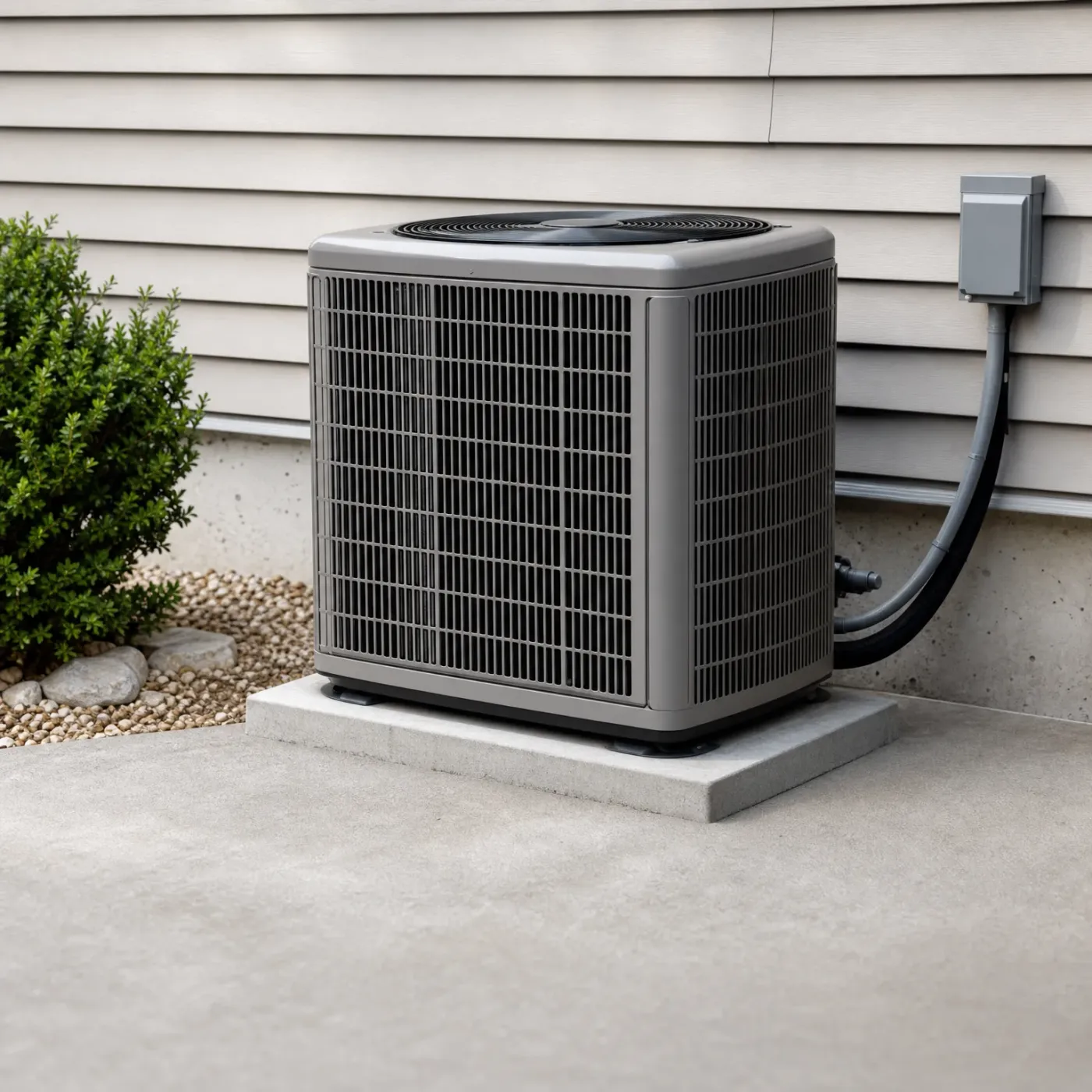
A gray outdoor condenser unit on a concrete pad beside a house with horizontal lap siding, connected by conduit and lines to a wall-mounted disconnect box, with a shrub and gravel bed to the left.
A clean coil and clear drain line let condensate run off the way it was designed to, no pooling in sight.
An outdoor air conditioner condenser unit on a concrete pad beside a house with horizontal lap siding, with refrigerant lines and a gray electrical disconnect box on the wall, surrounded by bare dirt.
Caked-on dirt blocks airflow across the coil and feeds the grime that clogs the drain line behind it.

Power costs 13.62 cents per kilowatt-hour statewide

At 13.62 cents a kilowatt-hour, your heat pump already costs something to run all summer. A clogged drain or dirty coil makes it work harder for the same cooling, so that rate shows up bigger on your bill until the leak gets fixed.

EIA-861 2025 statewide residential average

A woman and a child wrapped together in a thick knitted blanket on a sofa, both with eyes closed, with a lit table lamp and houseplant in the dim background.
An older woman with gray hair in a bun and glasses, wearing a beige knit sweater, smiles while looking to the side in a warmly lit kitchen, with a loaf of bread on the counter in the foreground and a snowy scene outside the window.
A gray outdoor condenser unit of an air conditioner or heat pump sits on a concrete pad beside a house with horizontal lap siding, with a wall-mounted disconnect box and conduit above it, mulched beds, shrubs and grass nearby.

No phone calls to make

The pro who reaches out is licensed in Iowa.

Explain the job once and skip repeating it on every call.

Skip calling around

Sending the form costs nothing.

Why does my heat pump only leak water when it's cooling, not heating?

You've noticed the puddle only shows up when the AC side is running, never in the winter months when the system is heating. That timing isn't a coincidence, and it points to where the water is actually coming from in the first place.

Condensation only forms when the coil is cooling the air

When your heat pump cools, the indoor coil runs cold, and humid Iowa air gives up its moisture against that cold surface the same way a cold glass sweats on a summer afternoon. That water has to go somewhere, so it drips into the drain pan and down the line. When the system switches to heating, the coil runs warm instead of cold, so there's nothing for moisture to condense against. No condensation means no water to drain, which is why a leak that shows up every summer can vanish completely come winter, even if the drain line or pan never actually got fixed.

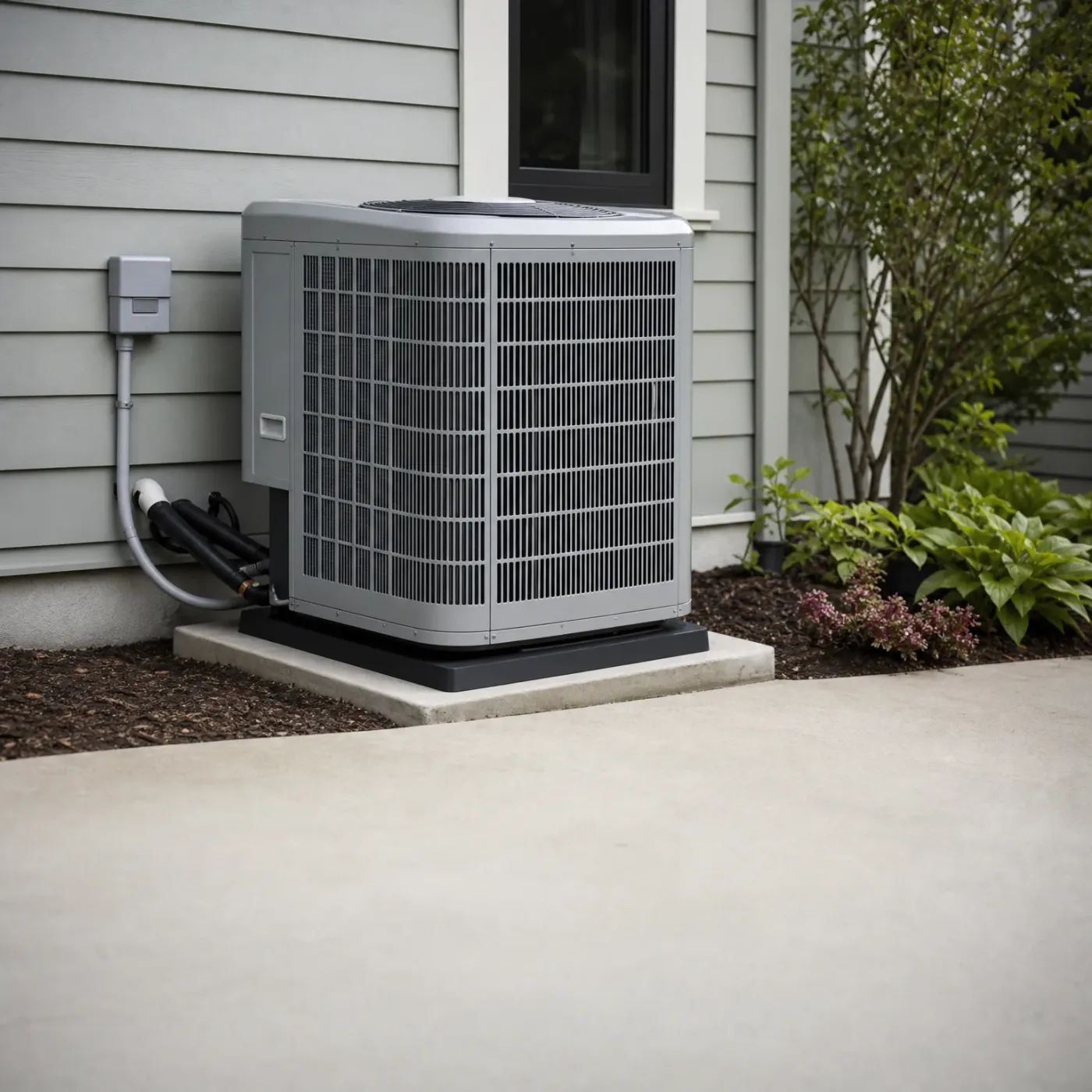
A gray outdoor condenser unit on a concrete pad beside a light-colored lap-sided house, with a wall-mounted disconnect box, refrigerant lines, mulch bed and shrubs, and a concrete walkway in the foreground.

Draining the way it should

This is what a heat pump looks like when condensate is leaving the way it's supposed to. The pad stays dry, the line outside runs clear, and nothing pools at the base. Refrigerant lines and the disconnect box are the only things you'd notice on a walk past it.
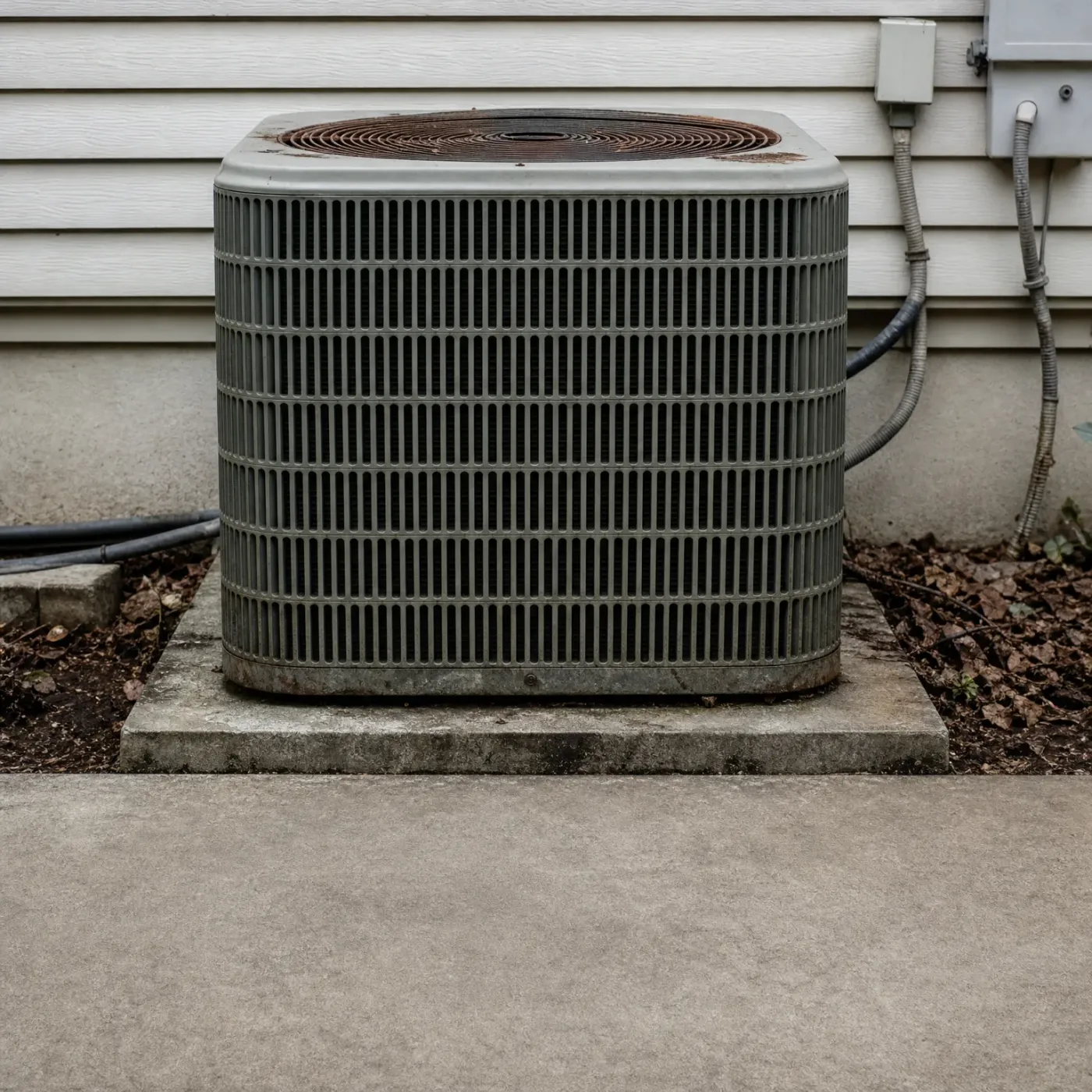

An outdoor air conditioner condenser unit with rust spots on its top grille sits on a concrete pad beside a house with light horizontal siding, with conduit lines and an electrical box on the wall and a mulch bed to the right.

Rust, grime, and a wet pad

Dirt built up around the base and rust on the fan grille are more than cosmetic. Grime like that works its way into the coil and the drain line over time, and a unit that looks like this is a likely candidate for the puddle you've found indoors.

A closed silver laptop and a ceramic mug of dark coffee sit on a wooden table in front of two chair backs, with a kitchen counter, tiled backsplash, wooden cutting boards, a vase of greenery and a potted plant by a window behind.

Water under the unit has a cause, and it's fixable

A puddle by your indoor unit comes down to a clogged line, a cracked pan, or a dirty coil backing up the drain. None of those clear up on their own, and left alone, the water keeps finding the same low spot on your floor all summer. A licensed contractor who works on heat pumps across Iowa summers can trace it to the actual part and fix that part, not just mop up the symptom.

Finding someone to do that is usually its own chore: searching around, calling a few places, describing the same puddle three different times, then weighing quotes that aren't quite comparing the same job. Here, you ask once. The request goes to one licensed local contractor who already knows what tends to fail on these systems after a summer of hard cooling, so you're not fielding calls from five companies trying to sort out who to trust.

A gray upholstered sofa with a matching cushion sits beside a potted plant and a wooden table holding a small green plant in a stone pot, near a curtained window.
Sunlit corner of a room with a wooden sideboard holding a ceramic vase of olive branches and a dark wooden bowl, beside a white-framed window, a hardwood floor and woven rug.
A wooden cabinet holding a pale ceramic vase with leafy branches stands beside a beige wall in a sunlit room with hardwood floors, a jute rug, and a window showing green foliage outside.
Sunlit room corner with a beige upholstered sofa holding a rust-brown cushion, beside floor-length linen curtains at a window, over a wood floor with a woven rug.
Corner of a room with beige walls, a framed photograph, a floor-length linen curtain beside a window, an upholstered armchair with a knit pillow, white baseboards and trim, wood flooring and a pale rug.
Sunlit living room corner with a beige upholstered armchair with a cushion, linen curtains beside a wooden-framed window, green vertical panelled wall with a framed print, and a wooden table edge over a woven rug.

One form, no calling around

Only one pro gets your request, so you hear from one company.

Fill out one form

You're not committing to anything by asking.